
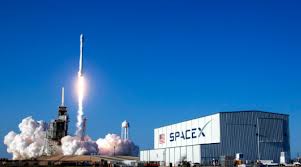
Elon Musk’s SpaceX intends to fix its IPO price at $135 per share in an unexpected move ahead of its investor roadshow to raise a record-breaking $75 billion.
The rocket and satellite communications corporation intends to sell 555.6 million shares. Its target valuation is $1.75 trillion.
Following years of low-key large-cap initial public offerings (IPOs), the listing spearheads a wave of well-known private firms getting ready to test public markets. Artificial intelligence behemoths OpenAI and Anthropic are expected to follow SpaceX.
With the IPO, SpaceX hopes to shatter records and defy convention.
Before investor presentations and bookbuilding, a set price is extremely uncommon.
To frame valuation expectations and enable pricing to be modified in response to investor demand, companies preparing to go public usually establish a price range.
Before the market launch, strong demand may cause the final price to rise above or to the top of the range.
Thursday marks the start of SpaceX’s roadshow. It had previously met with investors to “test the waters.”
As investor discussions begin, the company’s intentions, including the magnitude of the financing, could alter.
Weiheng Chen, a senior partner in Hong Kong at the U.S. legal firm Wilson Sonsini Goodrich & Rosati, stated that there is no regulation prohibiting SpaceX’s unusual proposal to set a fixed price for the IPO.
Chen stated that Musk is only adopting a “take-it-or-leave-it” strategy that appeals to his supporters and makes sense considering the state of the market and the absence of comparables.
MARS AND SPACE DATA CENTERS’ MISSION
Musk has altered SpaceX’s IPO strategy in numerous other ways, such as by advocating for early index inclusion, structuring governance to maintain strong founder control, and proposing to offer retail investors a bigger say in allocations.
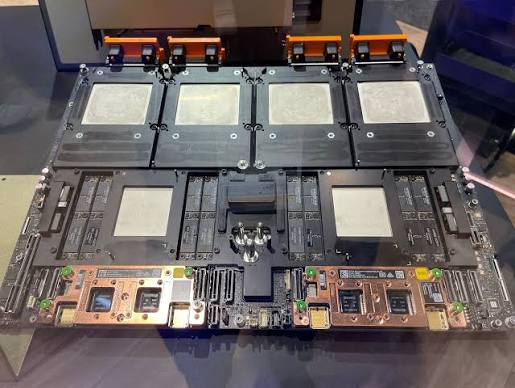
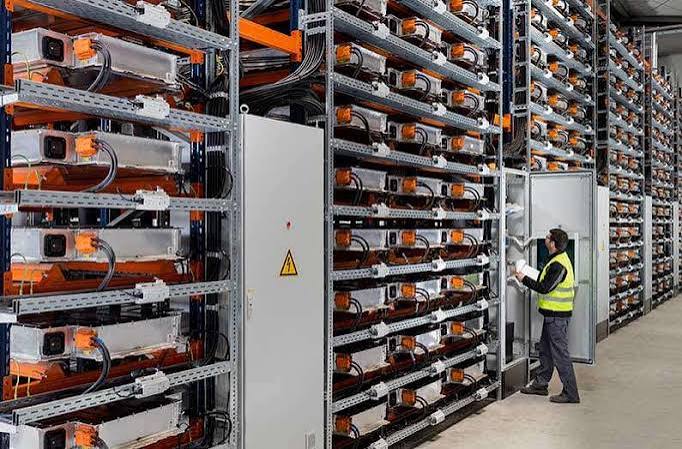
The company’s valuation is based on SpaceX’s dominance in untapped markets and technology, such as AI data centers in space and Mars missions.
The company is thinking of giving individual investors up to 30% of the offering, an exceptionally big retail tranche intended to capitalize on Musk’s cult-like fan base and increase ownership of the business.
The IPO is expected to be set up as an all-primary offering, which means that the firm will receive all revenues and that current SpaceX owners will not be able to sell any of their shares during the IPO.
Musk will have to hang onto his SpaceX shares for 366 days following the IPO as a sign to investors of his dedication to the business.
SpaceX’s satellite network and additional AI computer capacity will be funded by the IPO’s proceeds.
Earlier this year, SpaceX and Musk’s AI business xAI merged, valued at $250 billion for the Grok AI chatbot developer and $1 trillion for the rocket company.
Since the company doesn’t have any direct competitors, valuing it is open to interpretation.
According to a June 1 research note, Morningstar valued SpaceX at $780 billion, which is 48% less than its current private-market valuation.
Its Starlink satellite communications division, which generated the majority of its revenue, profits, and growth last year, accounts for the majority of that.
However, as it seeks a possible $28.5 trillion market, SpaceX has linked the majority of its growth possibilities to AI, and its plans rely on yet-to-be-built technologies for a big chunk of future revenue, including solar-powered data centers in space.
SpaceX would trade at a trailing price-to-revenue ratio of 93.7 times at a $1.75 trillion valuation and $18.67 billion in sales in 2025.
Similarly, data analytics business Palantir Technologies, space company Rocket Lab, at a multiple of 118, and Tesla at over 17.
SpaceX posted a net loss last year; thus, it cannot be assessed using a price-to-earnings ratio.
MEGA WAVE OF IPOs
With SpaceX, OpenAI, and Anthropic collectively likely to bring over $4 trillion in market capitalization to public markets and increase competition for investor cash, the listing is anticipated to spark a wave of mega IPOs.
Many investors place just as much money on Musk as they do on SpaceX. As his reputation has done for previous endeavors, his track record at the electric-vehicle company Tesla and his capacity to inspire retail traders may also generate significant demand for shares.
In reference to SpaceX’s unique IPO strategy, Craig Coben, a former co-head of Asia-Pacific global capital markets at Bank of America, stated, “When you’re the most anticipated IPO ever, you can ask investors to adapt to your process rather than the other way around.”
Only SpaceX’s connection division, which houses the Starlink satellite constellation, is making money and is considered the company’s cash cow; the other two of SpaceX’s three companies are burning cash.
In the three months that concluded on March 31, SpaceX’s revenue increased from $4.07 billion to $4.69 billion.
Over the same period, losses increased from 18 cents per share to $1.27 per share. It went from making a profit of $791 million to a net loss of $4.94 billion in 2025.
Experts have stated that investors may be put off by some corporate governance issues because a significant portion of SpaceX’s investment pitch depends on Musk.
A dual-class share structure outlined in the IPO prospectus is one of the measures that concentrate voting power in the hands of Musk and a select group of insiders.
SpaceX plans to trade on the Nasdaq with the ticker “SPCX.” The premiere is scheduled for June 12.
The offering’s joint book-running managers, Goldman Sachs, Morgan Stanley, BofA Securities, Citigroup, and J.P. Morgan, are in charge of a consortium of international investment banks that are underwriting the transaction.