

After the company’s earnings fell short of high expectations over demand for its bespoke AI chips business, Broadcom’s shares plummeted more than 14% on Thursday, pushing chip peers lower.
If the losses continue, the company’s market value of over $2.268 trillion will be reduced by more than $315 billion, making it one of the largest one-day wipeouts ever.
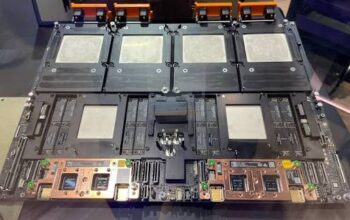
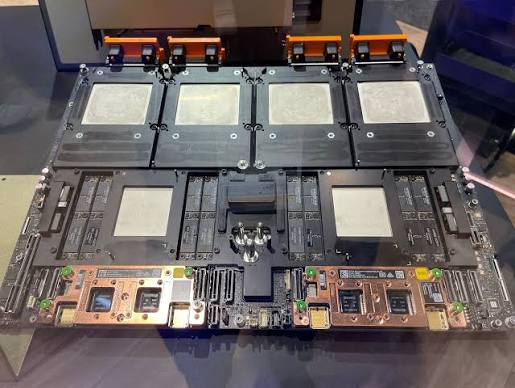
One of the main beneficiaries of the AI boom is Broadcom, thanks to its vital role in designing in-house processors for companies like Alphabet and Meta that serve as alternatives to Nvidia’s expensive chips.
Since ChatGPT’s 2022 launch, its stock has increased more than eightfold after years of stagnation.
As of the most recent closing, shares had increased 38% this year, including a 15% increase in the two weeks before its earnings following rival Marvell Technology’s excellent results.
However, experts noted that Broadcom is up against more formidable competition and that its staggering profits have left little margin for mistakes.
They said that investors were dissatisfied by the company’s choice to reiterate rather than increase its $100 billion AI revenue prediction by fiscal 2027.
While its current-quarter AI chip sales prediction of $16 billion was somewhat below Wall Street estimates, its second-quarter revenue of $22.19 billion also fell short of projections.
However, compared to roughly $5.2 billion a year ago, the $16 billion would represent a more than threefold increase.
The company’s rapid progress in the chip race is further demonstrated by the $100 billion projection made in March. In fiscal 2025, AI revenue was only $20.2 billion.
According to Matt Britzman, senior equities analyst at Hargreaves Lansdown, it is “a classic case of very high expectations meeting a market that wanted perfection.”
“Broadcom is one of the more exciting names in the AI infrastructure buildout, but it also came into results as one of the higher-risk names.”
The sector senses the heat.
Chip stocks plummeted between 1.6% and 6.5% as a result of the data, with Marvell down about 5%, AMD, Intel, Micron, and Qualcomm.
Earlier this week, a wave of encouraging news at Computex caused the equities to rise rapidly.
Indeed, Broadcom CEO Hock Tan stated that the company now anticipates shipping more than 10 gigawatts of AI chips in 2027, which is a little increase above earlier projections.
Additionally, executives stated that the corporation was “very comfortable” with the shortage of memory chips because it had secured supplies for 2026 and 2027.
According to LSEG data, at least 22 analysts increased their price targets on Broadcom’s shares because they were confident in the company’s long-term prospects, raising the median view to $500.
Compared to the stock’s most recent closing, that was an increase of more than 4%.
In contrast to Marvell’s 61.70 multiple and the wider S&P 500 index, which opens at 27.94, the stock is trading at 29.90 times its forward earnings expectations.
We believe that for the next few quarters, the shares might pause. However, once we reach 2027, the narrative becomes intriguing once more,” stated Stacy Rasgon, a Bernstein analyst, in a note.
“If we have to wait a quarter or two for that story to re-emerge, that’s OK; we’ll wait for it.”