
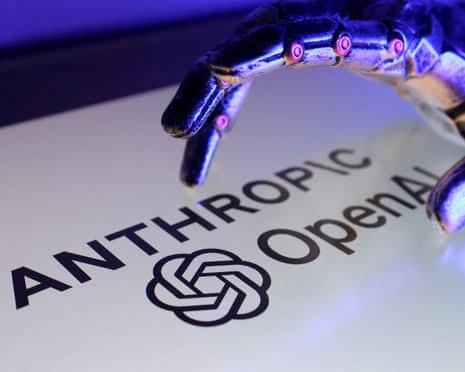
As Anthropic prepares for what could be one of the largest initial public offerings (IPOs) ever, Wall Street is valuing the AI business based on its potential income in two years, looking further into the future than it usually does.
Anthropic is expecting revenue of between $190 billion and $200 billion in 2028. This amount has not been previously disclosed.
The estimate reveals the extent of expansion investors are being asked to support and dwarfs the $47 billion revenue “run rate,” which reflects the company’s current business tempo and was announced as recently as May.
Bankers and investors use enterprise value-to-revenue multiples that are based on projections.
Revenue multiples are frequently used by rapidly expanding software firms that have not yet developed a solid profit profile.
However, looking two years ahead is less common because of how quickly Anthropic’s business is growing and the difficulties in establishing benchmarks for a firm that is still significantly investing in developing its AI infrastructure.
Many of the most well-known tech equities, including some of the companies that are equivalent to Anthropic, have seen declines in recent months due to the rate of expenditure on AI investments.
Some of the fastest-growing businesses that have lately entered the market have predecessors.
In the lead-up to the company’s IPO this year, backers of Cerebras Systems used revenue forecasts for 2028, while SpaceX had projections stretched as far as 2029 before the company went public at a record valuation in June.
The strategy captures the challenge of valuing an AI business whose profit margins are still being squeezed by massive expenditures on recruiting, processing power, and model training.
Investors are wagering that as Anthropic expands, revenue will increase more quickly than the expenses needed to sustain that expansion, enabling margins to climb.
LOOKING FOR COMPS
The public firms being used as benchmarks for Anthropic’s valuation before the company’s analyst day include Elon Musk’s SpaceX, cloud infrastructure company Cloudflare, and enterprise software company Palantir.
A key component of the IPO valuation process is the use of public-market comparables, which provide investors with a standard by which firms with comparable growth prospects and business models are assessed.
The peer group can also assist in deciding the profit or sales multiples to use in a company’s financial projections.
Palantir is one of Wall Street’s most expensive stocks, priced at 53 times the projected revenue for this year. According to LSEG data, SpaceX and Cloudflare are trading at 41.6 times their projected 2026 income.
Every business has a unique perspective on Anthropic. Investors who value companies with quick growth and exposure to AI now use Palantir as a benchmark.
SpaceX is an example of a business that is valued in part based on predictions for its future scale rather than its current financial profile, while Cloudflare offers a comparable one with a high-growth software and infrastructure company.
EXAMINING PAST AND CURRENT EARNINGS.
Earnings, or EBITDA, which provides investors with an understanding of the business’s economics, are usually used to value established enterprises more highly.
However, Anthropic’s present EBITDA falls short of what investors anticipate the business will do on a large scale.
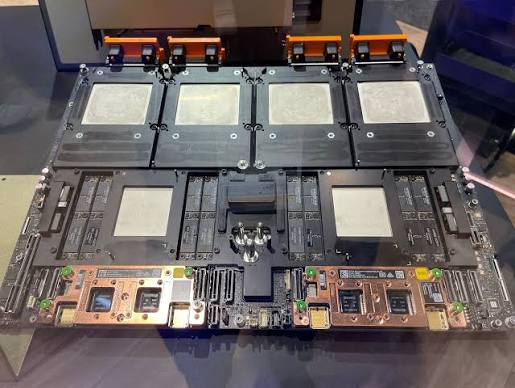
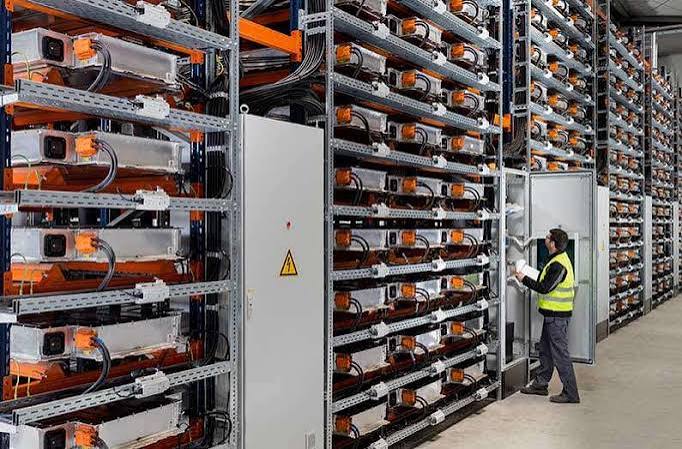
Anthropic is investing a lot of money in hiring, model training, inference, and GPUs and other computer power. These costs are essential to the company’s quick growth, but as it expands, they may represent a decreasing portion of revenue.
The financial trajectory of the company already demonstrates how rapidly that equation is shifting.
Anthropic’s revenue run rate was over $9 billion by the end of 2025 and increased to over $47 billion by May.
For the second quarter of 2026, Anthropic anticipates sales of at least $10.9 billion, which is more than twice as much as the previous quarter. This puts the company on track to have its first quarterly operating profit of $559 million.
According to the corporation, during the three years leading up to early 2026, its revenue run rate increased by more than ten times every year.
Investors are willing to apply a revenue multiple as far ahead as 2028 because of this increase.
As a result, the valuation is based on the assumption that Anthropic’s present expenditures are supporting a company that would eventually produce significantly better revenue and profit margins.
As technology advances, training and inference may become more effective, but as the business grows, personnel and other operating expenses may represent a lower portion of income.
David Merkel, a principal at the investment firm Aleph Investments, stated, “I simply wonder if it would stay there over time. Could they (Anthropic) attain a $2 trillion valuation? Does artificial intelligence (AI) actually increase productivity that much? If we were considering pricing or purchasing anything, we would just need to ask these questions.”