

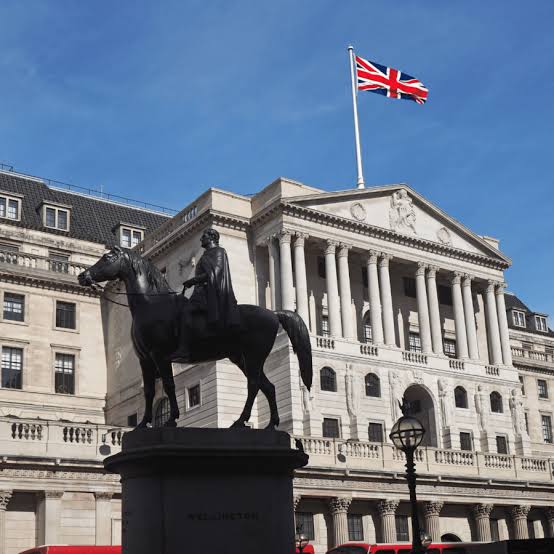
The Bank of England stated on Tuesday that investors’ large bets on artificial intelligence’s success and the technology’s increased susceptibility to hackers make it an increasing threat to financial stability.
The central bank stated that the dangers it had previously detected from stretched share price values, excessive public debt, and risky private credit lending to firms had not disappeared in a half-yearly assessment of threats to Britain’s financial system.
However, since its last assessment, it has drawn attention to other risks, such as investors (including hedge funds) taking out loans to purchase shares, AI-related businesses taking out large loans to finance investments, and the rapid expansion of AI’s potential for harm.
In spite of this, it concluded that Britain’s banking system was robust and made recommendations to facilitate banks’ reduction of capital holdings following a crisis in order to continue lending to the economy.
The BoE stated that for investors’ bets on AI to be profitable, the technology would need to be widely adopted, new infrastructure would need to be built efficiently, and the industry would need simple access to funding.
“A reassessment of these prospects could trigger a fall in equity prices that might be amplified by high concentration, correlated momentum-driven positions that can exacerbate volatility as markets fall, and increased leverage,” the BoE stated.
The sustainability of these companies’ debt would also depend on their future profit potential, it continued, pointing out that a lack of openness over their borrowing practices could exacerbate a problem.
Regulators throughout the world are starting to pay closer attention to the effects of AI, from the operational and cyber hazards connected to cutting-edge AI models like Anthropic’s Mythos to the difficulties presented by agentic systems that can function with little assistance from humans.
“Our frameworks were not built to contemplate autonomous agents, and relying on a human in the loop for all agent actions is unlikely to be realistic,” stated BoE Deputy Governor Sarah Breeden at the end of June, indicating for the first time the need for customized AI regulation to contain risks posed by increasingly capable agentic systems.
The BoE stated in its study on Tuesday that it was unclear if improved AI made it easier for attackers or those trying to protect financial systems.
However, financial firms would probably need to upgrade their software more frequently, which has a risk of disrupting their operations.