
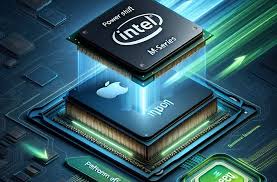
The Wall Street Journal reported on Friday that Intel has signed a preliminary agreement to produce some chips for Apple devices, potentially boosting Intel’s contract manufacturing business and Washington’s push to bolster U.S. chip output.
The corporations reached a formal agreement in recent months after more than a year of intense negotiations, according to the article.
On the news, Intel’s stock continued to increase, up 15%, while Apple’s shares were up roughly 1.7% during afternoon trading.
A contract with Apple would provide Intel with a continuous stream of demand from one of the biggest consumer electronics businesses in the world, improving its reputation and manufacturing business, which has lagged behind TSMC in recent years.
According to the Journal, Apple was brought to the negotiation table in large part by the U.S. government, which last year became Intel’s largest shareholder through an agreement with its CEO Lip-Bu Tan.
Although he was unable to comment on the rumored preliminary contract between Apple and Intel, an administration official stated that the administration had usually been attempting to support Intel.
“In general, we want to and have been helping Intel,” the person stated, clarifying that the initiative was made because Intel is a significant U.S. chip manufacturer rather than because of the company’s stock holdings. We’ve been working to increase Intel’s business.”
The partnership would also help the Trump administration achieve its objectives of boosting local manufacturing and increasing chip output in the United States.
According to the article, it is unknown which Apple devices Intel will produce chips for. Apple and Intel declined to comment.
As Apple looks for additional chip capacity, a partnership with Intel would help diversify its manufacturing base.
The company is mostly dependent on TSMC, whose advanced production lines are likewise in great demand from AI chipmakers like AMD and Nvidia.
During the company’s most recent earnings call, Apple CEO Tim Cook stated that supply issues at its contract manufacturer were impeding iPhone sales.
Years after Apple switched from using Intel-designed processors for its Mac computers to using its own bespoke silicon, the transaction would also bring the two businesses back together.
As Tan works to turn the company around, Intel has spent the last year forging agreements with the US government and obtaining financing from Nvidia and SoftBank.
According to the WSJ, Commerce Secretary Howard Lutnick visited with senior Apple officials, including Cook, SpaceX CEO Elon Musk, and Nvidia CEO Jensen Huang, on several occasions over the past year to persuade them to collaborate with Intel.