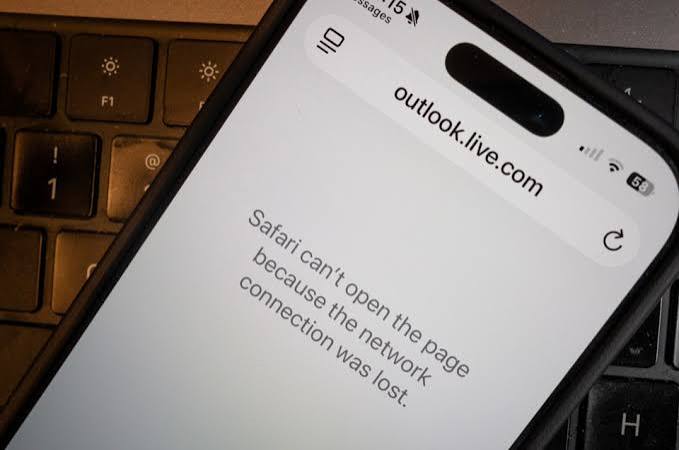

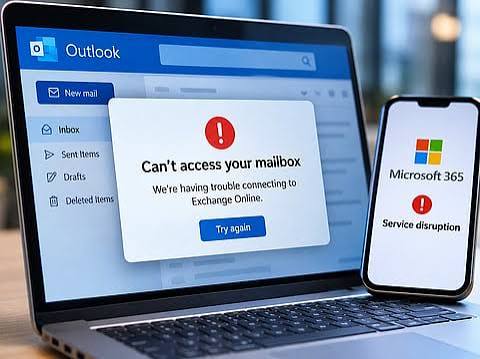
A worldwide Microsoft outage earlier this week knocked out email and other workplace tools, throwing offices and routine services into chaos across the globe. It also underscored the danger of leaning on one of only a handful of companies for critical technology.
Outlook, Teams, and the Copilot AI assistant were among the Microsoft 365 services affected. By the outage’s second day on Friday, Microsoft reported “encouraging recovery progress,” though it cautioned that some users could still face spotty access or slow email delivery.
In a social media post, the company acknowledged that customers depend on its services for daily work and expressed regret for the disruption.
The incident is another reminder of how failures can ripple outward when so many communication and tech platforms share the same provider. Some lawmakers outside the United States went further, arguing that the episode reveals the cost of relying too heavily on American technology companies.
Buy COMPLETE GLOBAL TRADE MASTERY @ https://selar.com/p/51175y15ag?affiliate=t3ke
Jeremy Singer, a professor at the University of Glasgow’s School of Computing Science, said the loss of email has left many office workers feeling as though they’ve been handed an unexpected day off. But he noted that the episode also exposes how heavily we’ve come to rely on a single company’s digital infrastructure and that it may prompt people to ask whether our IT systems need to be more resilient.
The outage spread worldwide almost immediately. Trouble began around midday Thursday in the U.S., and within an hour the tracking site Downdetector had logged reports from 74 countries and territories.
It’s unclear how many people were hit in total, but back in January Microsoft reported having over 450 million paid commercial subscriptions to its 365 services.
Microsoft rushed to restore its services.
A string of posts from Microsoft 365 on X indicated that its engineers had a hard time containing the problem for a while, which drew jabs from rival companies and users. The company has maintained that nothing points to malicious activity, and on Friday it specifically said the outage had nothing to do with a cyberattack or AI agents.
Buy E-COMMERCE BUILDER BUNDLE @ https://selar.com/p/r78po4856y?affiliate=3bl5
Microsoft explained that a technical fault surfaced during an upgrade that came after a recent change to its network and that bringing services back gradually added to the recovery time.
While working on problems with Exchange Online mailboxes, the company had earlier pointed to a failure that left several of its servers unavailable without warning during automated checks.
Many Outlook users reported being unable to send or receive email or couldn’t get their inboxes to load at all. Those issues built up across much of the globe and carried into Friday.
By Friday morning in the U.S., Microsoft said email backlogs had dropped sharply and were nearing normal levels, though it cautioned that spotty access and delays could continue.
On Thursday, the company announced it had restored Microsoft Teams in North America, even though some users still reported connection trouble.
Buy CHINA IMPORTATION MASTERCLASS @ https://selar.com/p/9c5884f481?affiliate=98wu
Disruptions spread from the courtroom to the pharmacy.
In Britain, the outage stopped a trial in Manchester in its tracks. Judge Maurice Greene dismissed the jurors for the day, saying the delays showed how risky it is for the court to depend so heavily on technology.
The British government said it was working closely with Microsoft to gauge the effect on public services, adding that solid contingency plans were in place to limit disruption.
UK police said the public couldn’t submit crime reports online and asked people with urgent matters to call instead. Some U.S. law enforcement was hit as well: the sheriff’s office in Arapahoe County, Colorado, for instance, reported that online bond payments were affected.
Elsewhere in Britain, the National Pharmacy Association cautioned customers to expect delays in receiving their medication. The National Health Service was also affected, and the outage put at risk doctors’ ability to email prescriptions to pharmacies.
A spokesperson asked people to be patient with their pharmacy teams, warning that waits could run longer than usual and some prescriptions might be delayed.
Buy varied products. @ https://selar.com/m/Ltrust?affiliate=tyvl
Governments in Singapore, Japan, Greece, and Norway reported that the outage disrupted parts of their operations, including email for some ministries or agencies.
Businesses, naturally, were hit hard too. Danny Lau, a Hong Kong businessman who runs an aluminum company, said his firm couldn’t get updates from its American customers through Outlook and that a prolonged outage could throw off his production schedule.
Several banks in Hong Kong, a major Asian financial center, were disrupted as well.
OpenAI and Anthropic both said they had trouble connecting to Microsoft 365 tools, showing how the effects spread further as more people use AI platforms to work with other companies’ software.
Echoes of the 2024 shutdown.
Some observers compared the incident to the 2024 CrowdStrike outage, which was triggered by a flawed update to computers running Microsoft Windows. That failure grounded flights and disrupted hospitals, banks, and retailers.
Buy @ https://nestuge.com/digitalproductsnew?affiliate=YgeqiT
Governments and institutions in Western Europe have been working to cut their dependence on a few large American tech providers as part of an ongoing drive for “digital sovereignty.” This week’s outage gave fresh momentum to those efforts.
Chi Onwurah, the British lawmaker who chairs Parliament’s Science and Technology Committee, said the outage once more exposes weak resilience in the UK’s digital infrastructure and the risks that reliance poses to national security, the economy, and public services.
She noted that her committee has already cautioned that the UK relies very heavily on a handful of American technology companies, which stops homegrown competitors from taking root.
Florian Druckenthaner, a spokesperson for Germany’s digitization ministry, said Germany’s IT security agency believes many German businesses were affected, though it reported no serious disruption within the government itself.
Even so, he said, the episode underlines the importance of building backups and alternatives, and Germany is already working on this.