
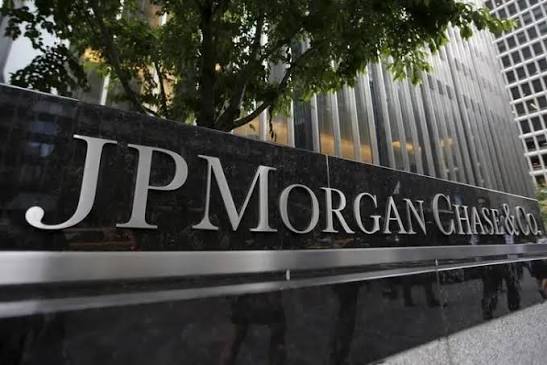
Jamie Dimon’s two decades at JPMorgan Chase have changed industry records, and the Wall Street giant is now on the verge of reaching yet another milestone: being the first bank ever to be valued at $1 trillion.
If the bank reaches this milestone, it will join a group of tech giants like Tesla, Meta, Broadcom, and others. It will also raise investor expectations and leave little tolerance for mistakes.
THE LAST STRETCH
JPMorgan’s stock hit a record high on Tuesday after a fantastic earnings report. The lender was last valued at almost $919 billion, dwarfing competitors, and declared the largest profit in U.S. bank history.
JPMorgan may experience more investment banking activity for the remainder of 2026, which might push it closer to the $1 trillion barrier, since dealmaking volumes are expected to complete the year close to the record haul of 2021.
The investment banking pipeline was strong, according to CFO Jeremy Barnum, since “the current activity levels seem to be encouraging more activity.”
LACK OF EQUALS
The bank, which has a larger balance sheet than its competitors, has taken advantage of its strength in Main Street lending and Wall Street dealmaking to profit from both economic engines.
According to Macrae Sykes, portfolio manager of Gabelli Financial Services Opportunities ETF, “the company benefits from a portfolio of leading financial services businesses, providing both diversification and durable competitive advantages.”
THE PREMIUM JAMIE
The “Jamie premium”—the additional value investors place on the bank due to its influential CEO—has long been associated with JPMorgan shares.
The stock still benefits from Dimon’s influence, even if its board has increased succession planning in recent years.
According to statistics produced by LSEG, JPMorgan trades at 14.63 times predicted earnings for the next 12 months, despite having underperformed the S&P 500 and S&P 500 banking indexes this year. In contrast, the S&P 500 banks gauge is 13.58.
“He has undoubtedly played a significant role in generating substantial returns for shareholders. Although the U.S. economic backdrop has been beneficial, the bank works in highly competitive areas, so performance has been crucial, according to Sykes.
INCREASED EXPECTATIONS
Although it is primarily a symbolic success, a milestone like $1 trillion in market value boosts expectations for future execution.
In reference to Walmart’s recent ledger drop below $1 trillion after reaching that milestone in February, Fabien Yip, market analyst at IG, stated, “If history is any guide, the trillion-dollar milestone does not…guarantee a smooth path forward.”
“We view shares as fairly valued,” stated Morningstar equities analyst Austin Taggart.
The bank may also be questioned about the sustainability of its trading success, which profited in the most recent quarter from market volatility triggered by the war in the Middle East.
Even while investment banking and trading had been more robust than first thought, he warned that it might be too soon to expect the current levels of activity to continue for very long.