
The executive of the 27-nation bloc announced on Thursday that the European Union is providing 10 billion euros ($11.4 billion) in funding for companies to build seven AI gigafactories in an effort to close the AI gap with the United States and China.
The European Commission stated that it hopes the public finance will attract an extra 20 billion euros ($22.8 billion) in private investment.
According to Henna Virkkunen, the executive vice president of the Commission in charge of tech sovereignty, “Europe needs access to the raw scale of computing power within AI gigafactories as AI development accelerates.”
Concerns about reliance on foreign technology suppliers, which they claim could be “weaponized” against Europeans, have increased the urgency of Brussels’ efforts to create “tech sovereignty.”
China has restricted the supply of minerals vital to the industry, and U.S. President Donald Trump has attacked the EU for its tech restrictions.
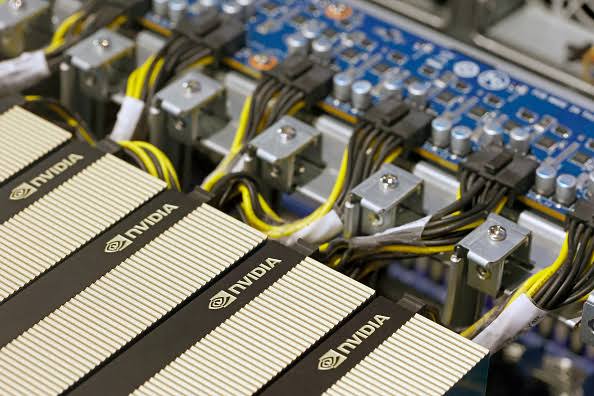
Gigafactories, which are expected to include at least 100,000 state-of-the-art AI chips—roughly four times more powerful than the data centers already operating in the EU—are now up for bid.
When these seven gigafactories go online, the EU’s existing computing power, which is provided by a network of 19 AI data centers from Finland to Spain, would more than double.
A 2025 U.S. Federal Reserve estimate said Europe is far behind the U.S. and China in critical areas for AI development. Although the United States receives the majority of private AI investment, China has a massive electrical power capacity for data centers.
According to a Commission report sent to the European Parliament in June, electricity in the EU can cost twice or three times as much as it does in the U.S. and China, and Europe does not produce many of the millions of components required for data centers.
The report, which listed the top five cloud service providers in the bloc as all American, stated that “European businesses and public authorities will continue to rely on US AI providers to the detriment of European service providers struggling to work at the frontier.”
“Reliance on hyperscale cloud and AI computing service providers will continue to expose data to third-country access and carry risks to service continuity, endangering operational autonomy, especially for extremely critical use cases.”
At its Paris location, France’s Mistral now operates one of the biggest AI data centers in the EU. The Le Chat chatbot is produced by Mistral, but it hasn’t kept up with Chinese competitors like DeepSeek and American AI firms like OpenAI, the creator of ChatGPT.
Deep concerns about the economic disruption and privacy consequences of the emerging technology are widespread throughout the continent, despite political figures like French President Emmanuel Macron raising the alarm about the lack of domestic AI businesses in Europe.
The Commission stated that AI products created with the expanding network of data centers will “follow EU standards on data protection, safety, security and ethics,” possibly alluding to the Digital Services Act and the Digital Market Act of the union.
40 mayors from all over the world signed an agreement in June to limit the detrimental effects of building AI data centers on the natural resources, energy costs, or climate goals of cities ranging from Phoenix to Melbourne.