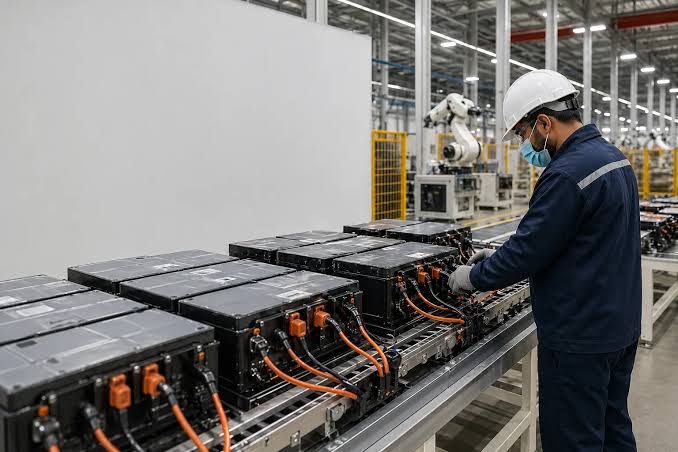

IMF Chief Kristalina Georgieva warns that while booming AI infrastructure funding anchors global growth at 3% and fuels Asian economies, it signals a “slow-moving tsunami” that will severely disrupt global jobs, taxes, and schools.
Advanced Asian economies could see a growth surge of 0.5% to 1.0%, while emerging Asian markets stand to gain 0.2% to 0.8% from this massive investment shock.
Speaking at the IMF and World Bank meetings in Bangkok, IMF Chief Kristalina Georgieva noted that accelerating AI development is sustaining 3% global growth despite energy supply drags, just ahead of Tuesday’s updated economic outlook.
While 18,000 global finance officials are attending the weeklong summit, notable figures like US Treasury Secretary Scott Bessent and Spanish Finance Minister Arcadi España are skipping the event to handle domestic issues.
Buy COMPLETE GLOBAL TRADE MASTERY @ https://selar.com/p/51175y15ag?affiliate=t3ke
Finance ministers from Canada, India, and the Democratic Republic of Congo—currently battling an Ebola outbreak that has claimed 4,000 lives—will also miss the summit, though Saudi Finance Minister Mohammed al-Jadaan will still attend despite a Houthi attack halting Riyadh airport operations.
Addressing AI job threats, Georgieva warned that IMF data projects the technology will disrupt 40% of jobs globally and up to 60% in advanced economies, shifting economic weight from labor to capital and forcing massive overhauls in employment, tax revenue, and education.
An early study reveals that 10% of US jobs now demand AI literacy, and while routine roles are disappearing, low-paying jobs are growing in construction and data centers.
IMF Chief Georgieva described AI as a deeply transformative tool reshaping daily life and work—citing her own AI-generated morning schedule briefs—while highlighting that while the US, China, and India dominate the supply chain, Asian nations like summit-host Thailand provide the critical hardware infrastructure.
Singapore President Tharman Shanmugaratnam warned that governments must urgently tackle a drop in entry-level job demand for graduates, cautioning that a passive approach to AI will widen the wealth and employment gap between developing and advanced economies.
Buy E-COMMERCE BUILDER BUNDLE @ https://selar.com/p/r78po4856y?affiliate=3bl5
He urged global leaders to use AI proactively to create high-quality human roles that preserve career advancement opportunities despite automation.
World Bank President Ajay Banga disputed fears of entry-level job destruction, arguing that major AI disruptions will target advanced economies building large models rather than emerging markets.
Instead, Banga stated the World Bank is focusing on “small AI”—tools that skip massive computing power to boost productivity directly for farmers, health clinics, and teachers.