
Poland’s residents were paid a tenth of what West Germans made, and the country rationed grain and sugar a generation ago.
With an annual production of more than $1 trillion, its economy has surpassed Switzerland to become the 20th largest in the world.
The Trump administration claims that Poland’s attendance at a summit of the Group of 20 leading economies later this year is a testament to the country’s historic transformation from the post-Communist ruins of 1989–1990 to today’s European growth champion, which economists say has lessons on how to bring prosperity to ordinary people.
People like Joanna Kowalska, an engineer from Poznan, a half-million-person town halfway between Berlin and Warsaw, are examples of the change. After living in the United States for five years, she went back home.
I’m frequently asked if returning to Poland is something I’m missing, and to be honest, I think it’s the other way around,” Kowalska remarked. “In so many areas, we are ahead of the United States.”
Kowalska is employed by the Poznan Supercomputing and Networking Center, which is building Poland’s first AI factory and combining it with a quantum computer—one of ten on the continent funded by an EU initiative.
After graduating from Poznan University of Technology, Kowalska worked for Microsoft in the United States, a position she described as a “dream come true.”
However, she claimed that she missed having a “sense of mission.”
“The technology started developing so rapidly in Poland, especially when it comes to artificial intelligence,” Kowalska continued. “Therefore, it was very tempting to return.”
Several elements that contribute to escaping poverty.
Since the G20 first met at the level of finance ministers in 1999, no guest nation has been elevated to full membership, and it would require a unanimous agreement from all members.
Therefore, the invitation to the G20 meeting is primarily symbolic. Furthermore, the initial nations were selected based on their “systemic significance” in the global economy rather than just their GDP rank.
However, the gesture represents a statistical reality: Poland’s per capita gross domestic output increased to $55,340 in 2025, or 85% of the EU average, in just 35 years, or slightly less than one person’s working lifespan.
According to International Monetary Fund numbers expressed in current dollars and adjusted for Poland’s lower cost of living, it is now about comparable to Japan’s $52,039, up from $6,730 in 1990, or 38% of the EU average.
Since joining the EU in 2004, Poland’s economy has expanded at an average annual rate of 3.8%, much exceeding the 1.8% European average.
According to Marcin Piňtkowski of Warsaw’s Kozminski University and author of a book on Poland’s economic ascent, it wasn’t just one element that enabled the country to escape the poverty trap.
He claimed that quickly creating a solid institutional structure for business was one of the most crucial elements. This featured tight regulation to prevent failed banks from stifling lending, independent courts, and an anti-monopoly agency to guarantee fair competition.
As a result, unlike other parts of the post-Communist world, the economy was not taken over by oligarchs and unscrupulous activities.
Both before and after joining the bloc in 2004 and gaining access to its massive single market, Poland also profited from billions of euros in EU aid.
Above all, there was widespread agreement across partisan divides that Poland’s long-term objective was to join the EU.
According to Piłtkowski, “Poles knew where they were going.” “The institutions, the rules of the game, and even some cultural norms that the West spent 500 years developing were downloaded by Poland.”
Despite its oppressive nature, communism made a contribution by dismantling long-standing social barriers and providing factory and farmworkers with access to higher education. Due to the post-Communist surge in higher education, half of today’s youth hold degrees.
According to Piatkowski, “young Poles are, for instance, better educated than young Germans, but they earn half what Germans do.” According to him, that is “an unbeatable combination” for drawing in investors.
A successful journey on an electric bus.
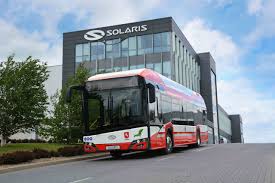
Krzysztof Olszewski started Solaris in Poznan in 1996. With a 15% market share, Solaris is one of the top producers of electric buses in Europe.
Its narrative demonstrates a key component of Poland’s success: entrepreneurship, or the readiness to take chances and create something novel.
Olszewski, who had his engineering training under the Communist regime, started a car repair business where he fixed Polish vehicles with West German spare parts.
According to Katarzyna Szarzec, an economist at the Poznan University of Economics and Business, authorities allowed small-scale private workshops like his to continue operating even while the majority of businesses were nationalized. She described them as “enclaves of private entrepreneurship.”
Olszewski began manufacturing for the Polish market in 1996 by establishing a subsidiary of the German bus business Neoplan.
Mateusz Figaszewski, in charge of institutional relations, stated, “Poland’s entry into the EU in 2004 gave us credibility and access to a vast, open European market with the free movement of goods, services, and people.”
Then, in 2011, when few people in Europe were experimenting with the technology, a daring decision was made to begin manufacturing electric buses.
Larger Western businesses, according to Figaszewski, stood to lose more if the transition to electric vehicles proved unsuccessful.
He stated, “It became an opportunity to achieve technological leadership ahead of the market.”
An aging population continues to be a problem.
Poland still faces difficulties. There will be fewer workers to support retirees as a result of an older population and a low birth rate.
Compared to the EU average, average wages are lower. While small and medium-sized businesses thrive, very few have established themselves as worldwide brands.
According to Poznan Mayor Jacek Jaśkowiak, homegrown innovation represents a third phase of Poland’s post socialist economic growth. In the early 1990s, foreign nations established factories in Poland as part of the first wave, capitalizing on the country’s skilled labor force.
He claimed that increasingly sophisticated fields like finance, IT, and engineering were introduced by Western businesses around the year 2000.
Jaśkowiak states, “Now is the time to start such sophisticated activities here,” adding that investing in colleges is one of his top objectives.
Szarzec, the economist from Poznan, continued, “There is still much to do when it comes to innovation and technological progress.” However, we continue to climb the value-added ladder. We are no longer merely a provider of replacement parts.
According to Szarzec’s students, more needs to be done to encourage young people to start families, lower housing costs, and lessen urban-rural disparities.
According to them, Poles must recognize that immigrants—like the millions of Ukrainians who fled the Russian invasion in 2022—contribute to economic growth in an aging society.
One of Szarzec’s graduate students, Kazimierz Falak, 27, stated, “I am staying because Poland has such a dynamic economy with so many development opportunities.” “Poland shows promise.”