
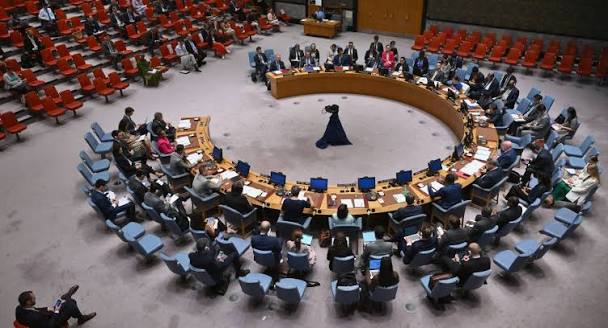
This week, world leaders convene in New York for the UN General Assembly, anticipating President Donald Trump’s second consecutive year in office.
Discussions will focus on the dangers of artificial intelligence and the escalating tensions in the Middle East and Ukraine.
Nearly 130 heads of state gather as the post-World War II order is in jeopardy, the UN is fighting to stay relevant, and Trump, who has reduced American contributions and withdrawn from dozens of UN bodies, is attacking the organization.
Chinese leader Xi Jinping, who last spoke at the diplomatic jamboree via video in 2021, will meet with Trump one-on-one in Washington on Thursday instead of traveling to New York, sparking discussion over the UN’s usefulness in handling international crises.
Concerns regarding the 80-year-old organization’s next head exacerbate the financial and morale crisis: There isn’t a clear front-runner to succeed Secretary-General António Guterres when his tenure expires at the end of 2026.
High-level sessions on the Middle East, AI, and Ukraine may be held by the 15-member UN Security Council, including discussions with Arab leaders, according to diplomats.
Richard Gowan of the International Crisis Group stated that more than a year into Trump’s second term, “we would no longer say that the UN is in freefall, but we would say that it’s stuck in an open-ended crisis.”
The UN appears to be stuck in a trauma center for the foreseeable future, even though it may not be in emergency care like it was last year, according to Gowan.
By contributing $725 million to the normal budget this week, the US was able to avoid losing its vote at the assembly, but it still owes the organization more than $1 billion and continues to demand reforms and cuts.
A GROWING RISK OF AI
The conference convenes immediately after a number of prominent figures in the artificial intelligence sector demanded a coordinated halt to the technology’s advancement, cautioning that it may soon advance independently and become uncontrollable.
AI will be a big topic, according to Guterres, who also stated that nations pushing its boundaries should establish “common guardrails to avoid this race to the bottom that could lead one day to a gigantic disaster at the global level.”
The secretary-general has long advocated for global AI governance.
An advisory group on technology was established by the UN in 2023, and its members include academics, government leaders, and tech executives.
Guterres and Trump are at odds with the warning, with Trump dismissing the hazards associated with AI as a “hoax,” claiming there is a “sick conspiracy” against it and that China will win from the uncertainty around its growth.
Middle East Tensions Rise:
The ongoing U.S.-Israeli war on Iran continues to destabilize the region and fuel global inflation.
Aggressive advances by Houthi rebels near the critical Bab el-Mandeb Strait threaten international shipping routes and risk driving energy prices even higher.
Though UN Secretary-General António Guterres noted intense diplomatic pushes for peace, he warned that past conflicts in Yemen prove a military option will not work.
Instead, peace negotiations remain completely gridlocked by continuous military strikes and President Trump’s threats to heavily escalate the war.
Key speakers at the upcoming UN General Assembly include Iranian President Masoud Pezeshkian on Wednesday, followed by Israeli Prime Minister Benjamin Netanyahu on Thursday.
Netanyahu’s scheduled address comes despite an outstanding International Criminal Court warrant for alleged war crimes in Gaza—accusations that Israel firmly denies.
Meanwhile, Palestinian President Mahmoud Abbas will miss the summit in person for the second consecutive year after the U.S. denied his visa request, though a recent General Assembly vote will allow him to deliver his remarks via video.
Additionally, diplomats expect sideline meetings to address the ongoing war in Sudan, though hopes for a diplomatic breakthrough remain slim.
Russia’s four-year-old war in Ukraine remains a central focus of the UN agenda.
Both Ukrainian President Volodymyr Zelenskyy and Russian Foreign Minister Sergei Lavrov are set to speak, with diplomats noting that Zelenskyy aims to reinforce international backing before another difficult winter.
Meanwhile, the UN Security Council remains gridlocked on the issue due to Russia’s permanent veto power.
U.S. President Donald Trump has expressed frustration over his stalled efforts to end the conflict—a key goal since starting his second term last year. Still, it remains uncertain whether he will meet with Zelenskyy in New York, despite a recent phone call with Vladimir Putin.
UN Chief António Guterres re-emphasized that the war continues to take a severe toll on civilians, global food security, and energy prices.
“The effective blockade existing in the Black Sea is creating enormous problems that add to the problems generated by the Middle East crisis, and I think it would be very important to find a way to allow Ukrainian exports and Russian exports of food, fertilizers, and energy to take place safely through the Black Sea,” he said.