
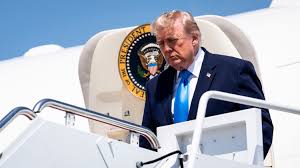
Hours before a scheduled White House ceremony on Thursday, President Donald Trump canceled plans to sign a new executive order on artificial intelligence, citing concerns that the action might weaken America’s advantage in AI technology.
Trump said that since he disagreed with the content of the order, he was delaying the meeting with executives from the IT sector at the Oval Office. Trump told reporters, “We’re leading China, we’re leading everybody, and I don’t want to do anything that’s going to get in the way of that lead.”
The order would have created a framework for the government to assess the national security dangers of the most sophisticated AI systems before their public release. According to the person, the command was described as a voluntary partnership with participating U.S.-based tech firms, such as Google, OpenAI, and Anthropic.
The banking sector and other organizations are becoming increasingly concerned about the advancements in AI’s capacity to identify cybersecurity flaws in the world’s software, which has prompted calls for some sort of government action to examine top AI systems.
In April, Wall Street CEOs were called to an urgent conference by Treasury Secretary Scott Bessent and departing Federal Reserve Chair Jerome Powell to warn them about the cybersecurity concerns associated with Anthropic’s AI model, Claude Mythos.
Bessent stated at CNBC’s “Invest in America Forum” in Washington in April that the purpose of the hastily called meeting at the Treasury Department’s headquarters was to make sure banks were aware of the risks connected to the models.
He declared, “This new Anthropic model is very powerful.” “We want to be able to gather banks that are performing better than others in cybersecurity and discuss best practices and future directions.”
This prompted some of the Republican president’s allies to suggest more effective ways to transfer those AI tools to reputable cybersecurity professionals.
Voters’ concerns about AI’s effects have clashed with Trump’s aspirations. Trump had promised to repeal the AI safety rules established by Democratic President Joe Biden, his predecessor.
Trump’s administration has seen the AI industry as a means of fulfilling his promises to grow the economy, and he has highlighted its leading companies at White House and international events. Tech CEOs accompanied Trump to a conference with Chinese President Xi Jinping last week.
Trump’s aspirations for the industry have clashed with voters’ concerns about how technology would affect American jobs, daily living, and electricity costs. Republicans themselves are split on whether to support voters who show doubts about the technology or welcome the AI sector.
The government’s ongoing legal dispute with Anthropic further complicates the government’s interest in collaborating with the company on cybersecurity. In February, following an exceptionally public dispute between the Pentagon and CEO Dario Amodei, Trump ordered all U.S. agencies to cease using Anthropic’s chatbot Claude.
According to Serena Booth, a computer science professor at Brown University and a former AI policy fellow in a Democratic-led Senate committee, there are conflicting groups within the administration.
She remarked, “We do see this kind of public fighting. “We are going to issue an executive order. No, we won’t. This afternoon, we will sign it. The signing has been canceled, I see. I believe that these fractures are the cause of this whiplash.
Some of those disagreements involve striking a balance between what Booth described as a “reasonable idea” to evaluate the best AI models before their public release and worries that government monitoring could burden AI developers if it takes too long.
She stated, “It does come at a potentially very large cost to innovation and speed of development.” “I do see both sides, and I believe there is a real risk here.”
State legislation aiming to regulate AI has been opposed by the White House, which claims the regulations could slow growth. A major change in the administration’s strategy would have been indicated by a new executive order that would have been interpreted as government vetting of commercial AI models.
Similar screening is already taking place at the same time. Building on earlier deals the Biden administration made with Anthropic and OpenAI, Trump’s Commerce Department revealed earlier this month that it had secured contracts with Google, Microsoft, and Elon Musk’s xAI to assess their most potent AI models before their public release. However, the announcement later vanished from the website of the Commerce Department.
The White House explains striking a balance between innovation and safety.
Vice President JD Vance declined to discuss the order’s specifics during a White House press briefing on Tuesday, but he stated that the administration wants to support innovation while also tackling cybersecurity risks and data privacy.
“The president wants us to support innovation. “He wants us to outperform every other nation in the world in the AI race,” he stated. “We also want to make sure that we’re protecting people,” Vance continued.
When questioned about new models that might raise security issues, Vance stated that the administration is cooperatively working with tech companies.
He added, “It also has some drawbacks, and we’re trying to balance that safety against innovation.”
The conflicts probably reflect “healthy tension” in an administration that has long been hesitant to regulate “frontier AI” firms like Anthropic, OpenAI, and Google, according to a former White House tech policy adviser who was a main author of Trump’s AI policy roadmap.
According to Dean Ball, who is currently employed at the Foundation for American Innovation, “they don’t want to do it because it’s politically risky in a million different ways.” Ball stated that “ultimately, I’m fine with them taking time to get this right,” but he would support an executive order that would encourage those businesses to collaborate more closely with the government on cybersecurity.