
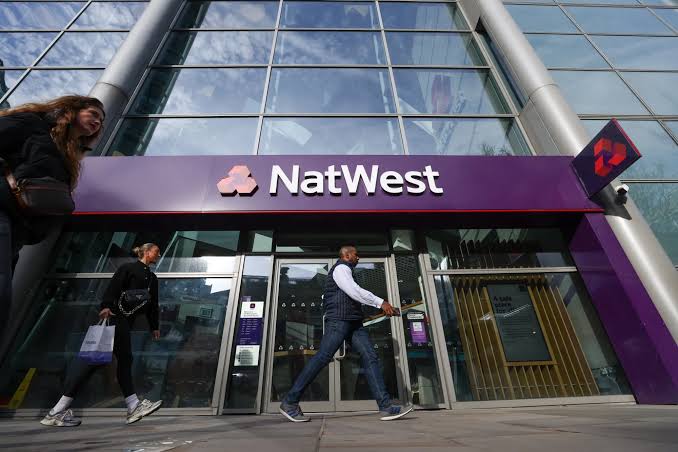
In the years before its collapse last month, London-based consumer credit company Amplifi Capital received up to £250 million ($333 million) in funding from Britain’s NatWest, according to company papers, as authorities warn banks about such lending.
Amplifi, a company that specializes in unsecured personal loans, has £119 million in total assets as per its last-filed records for the year that ended in March 2024. After finding it difficult to adjust to new consumer credit regulations, it declared bankruptcy in June.
NatWest provided loans to Castor Financing, a company that funded Amplifi, between 2023 and 2025.
The unreported connections between Amplifi and Britain’s largest business lender demonstrate how banks have made significant loans to non-bank financial institutions (NBFI).
One of the international regulators looking at whether NBFI defaults could endanger the larger financial system is the Bank of England.
Banks like Barclays and HSBC suffered losses when UK mortgage originator Market Financial Solutions failed earlier this year, owing £1.8 billion.
Jackie Ineke, chief investment officer at Swiss fund Spring Investments, stated, “We have begun to see how the banks are involved in NBFIs that have collapsed, but we could never have known it the day before, so it is scary.”
It could not be confirmed whether Amplifi or associated companies owe money to NatWest, which has a £160 billion commercial loan book. The largest source of funding for Amplifi is its investment in Castor.
Both the Bank of England and Britain’s Financial Conduct Authority, which is in charge of NBFIs, declined to comment, citing their policy not to comment on specific companies.
“SECURITIZATION WAREHOUSE”
Amplifi started up in 2013 as a modest lender to credit unions. In 2022, the company launched its Reevo brand, which provided unsecured personal loans with interest rates ranging from 23% to 50%.
According to Companies House papers, Amplifi sold some of its loans to Castor in 2023 in an effort to finance its expansion. Castor then sold loan notes to NatWest.
“Special purpose vehicle for the purpose of purchasing a portfolio of loans” is how Castor defines itself. Amplifi originated and serviced those loans, according to documents.
According to a post on an archived version of its website, Amplifi announced in September 2023 that it had established a £100 million “securitization warehouse” with NatWest to increase its lending.
As a result, NatWest, which was owned in part by the British taxpayer until May 2025, was exposed to higher-risk consumer lending, which is something that laws strongly advise banks to stay away from.
According to business documents identifying NatWest as the holder of “Class A2” credit notes, Castor increased its debt facilities in March 2025.
The notes were listed on an exchange, as is typical for this kind of debt. According to March 2025 filings on the Vienna Stock Exchange, the Class A facility was raised to £250 million.
In March 2025, British asset management M&G was identified as the owner of up to £56 million worth of Castor’s “Class B” notes.
According to an M&G representative, “funds managed by M&G first provided financing to Amplifi in 2023 and subsequently supported the business through its financial difficulties,” delaying interest payments while Amplifi looked for methods to stay afloat.
FAMOUS WITH BANKS
Because Amplifi’s financing method requires banks to set aside less capital against potential losses than standard loans, it has gained popularity.
Michael Roberts, CEO of corporate and institutional banking at HSBC, informed British legislators in November that banks must have 20% capital, as opposed to 100% if they lend directly.
According to a Barclays estimate, banks can triple their return on equity by funding NBFIs through securitization rather than directly lending money to the non-banks’ own clients.
Although sections of financial markets were exposed, the European Central Bank stated in May that the bloc was not at systemic danger due to private credit instability. These debtors make up a minor portion of larger bank balance sheets.
However, according to ECB data, European banks’ exposure to non-bank financing companies has increased, from about 6% of their total assets ten years ago to 11% by the end of 2025.
Speaking broadly about NBFI defaults thus far, Ineke at Spring Investments stated, “It leads to fears of what’s the next one, will there be a bigger one, and how will we know?”
DIFFICULT TIME
The additional investment from NatWest and M&G for Castor came at a challenging moment for Amplifi, which, according to its most recent filed records, incurred a £100,000 financial loss in the year ending March 2024, down from a £5.5 million profit the previous year.
According to the 2024 accounts, Amplifi was compelled to reassess its methods following the introduction of new UK legislation in July 2023.
The auditors’ assessment of the corporate statements stated that the company had grown overly dependent on its credit union business, where performance had soured.
Amplifi had multiple funding sources, including a £50 million loan facility with an unidentified institution in 2024.