

Anthropic proposed paying about $7 billion to acquire artificial intelligence chip firm MatX in order to expedite efforts to create specialized hardware for its rapidly expanding AI business.
The AI lab’s goal to acquire the resources and talent required to develop its own chips is highlighted by the merger talks. Accelerating Anthropic’s internal chip development is the aim.
MatX, which was created by former Google Tensor Processing Unit (TPU) engineers, is currently looking to raise new financing at a valuation of roughly $4 billion.
CHIP PLANS FOR THE IPO ROAD
As Anthropic expands its Claude family of AI models, the company wants to create technology that can satisfy its insatiable need for data processing and lessen its dependency on Nvidia chips.
In order to speed up the potentially years-long chip design process, Anthropic, which is anticipated to list this year, has hired management and engineering talent.
Anthropic’s IPO, which is anticipated months after SpaceX went public with a $1 trillion value, will aim for a $2 trillion valuation, which depends on a revenue estimate of up to $200 billion in 2028.
Anthropic stated that it is growing its internal silicon team to create unique processors that will improve the speed and efficiency of Claude models.
Additionally, it intends to maintain a multi-chip strategy by collaborating with suppliers like Google and Nvidia.
Chip design is costly and time-consuming. Producing a functional piece of hardware can take up to a year, and the cost of designing a single generation can reach the hundreds of millions of dollars.
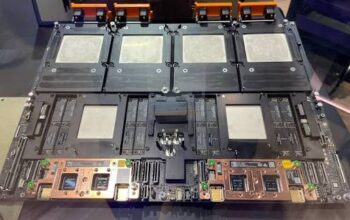
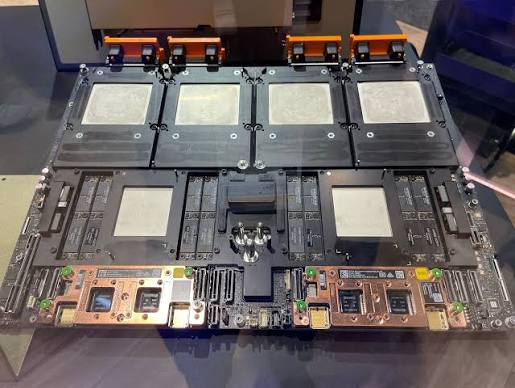
Acquiring an AI chip business like MatX would provide Anthropic with internal design experience and potentially save expenses in the long run. MatX has been developing a microprocessor that might be helpful for training huge AI models.
Anthropic intends to purchase chips directly and spend tens of billions of dollars renting processing capacity from cloud companies.
It announced a $45 billion agreement to rent AI cloud computing capacity from Nscale and intends to purchase $36 billion worth of Google’s AI hardware.
Through May 2029, it committed to paying SpaceX $1.25 billion a month for processing capacity throughout its data center clusters.
CONVERSATIONS WITH ADDITIONAL AI CHIP STARTUPS
The conversations with MatX also indicate that Anthropic would be interested in creating a training chip, while rival OpenAI and other chip startups seek chips better suited to inference—the process of generating responses from chatbots.
Anthropic may also decide to make an inference chip.
Anthropic spoke with several AI chip startups in recent weeks. It hasn’t decided to buy anything yet.
Anthropic’s executives and engineers are holding these sessions in an effort to comprehend the variety of chip design techniques available today.
Leading AI labs like Anthropic and OpenAI are increasingly concentrating on bespoke processors that can be adapted to their models and workloads.
They intend to achieve notable performance and financial benefits by doing this.
This week, OpenAI said at a conference that its first bespoke chip, Jalapeno, outperformed a comparable Nvidia CPU.
Executives at OpenAI saw that the chip performed inference calculations more efficiently.
Making a proprietary chip might also help Anthropic protect itself against Nvidia’s limited supply of processors, which the company stated in a conference call on Wednesday will be scarce until 2027.
Amazon produced its Inferentia and Trainium processors, while Google created TPUs.
One of the first businesses to run its models on hardware from many manufacturers, such as Nvidia, Google, and Amazon, was Anthropic.
In order to fulfill the increasing demand for its models, the corporation has been looking for additional processing power.
One such arrangement is the utilization of SpaceX’s Colossus 1 facility, which contains over 220,000 Nvidia chips.