
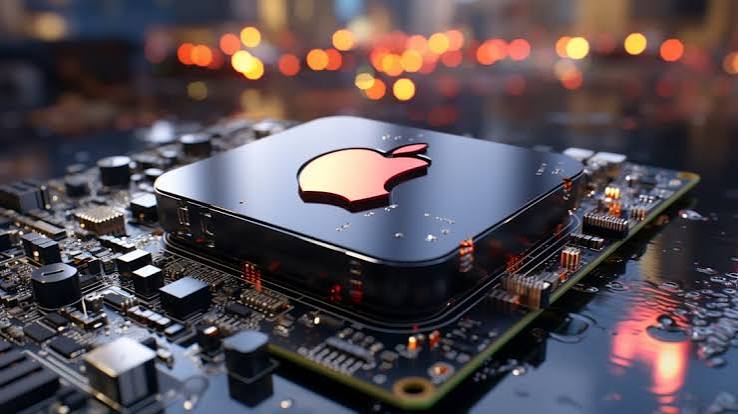
As investors reevaluate the prospects for artificial intelligence, Apple overtook Nvidia on Friday to become the most valuable business in the world, shifting the top ranks of tech giants.
Nvidia was last valued at approximately $4.86 trillion, following a 3.5% decrease, while Apple was valued at $4.88 trillion, as its shares remained unchanged.
The change in the hierarchy indicates that investors are looking beyond the most obvious winners of the AI boom, such as Nvidia, which had been in the lead for almost a year. For the first time since April of last year, Apple is taking back the top rank.
Toni Meadows, head of investing at BRI Wealth Management, said, “Apple was perceived as a laggard in the AI race because it wasn’t spending to develop models, but sentiment has now changed.”
Apple is better positioned to profit from AI through services, ecosystem lock-in, and hardware upgrades since it is less susceptible to the intensity of capital expenditures. Rather than speculative AI upside, the re-rating indicates confidence in earnings resilience.
The achievement represents Apple’s attempts to solidify its position as one of the industry’s top firms, which could influence how CEO Tim Cook’s last few months in charge are perceived for a business that was frequently perceived as lagging in the AI race.
John Ternus, a hardware veteran, will take over Cook’s position in September.
In an attempt to close the gap with Big Tech competitors and cut-edge startups in the critical AI battle, the company launched a long-delayed redesign of Siri last month.
The personal information stored on each iPhone, according to some analysts, is Apple’s AI gold mine.
The information might improve the usefulness of Siri’s responses and the assistant’s capabilities.
The problem is that operating systems encrypt such data for privacy reasons, so the business would need to figure out how to unlock its worth.
LIFTING NEW WINNERS WITH AI SPENDING
In October, Nvidia became the first firm globally to surpass a $5 trillion market capitalization, a milestone that catapulted it into a rarefied realm well beyond the reach of its competitors.
Being overtaken by Apple may not always indicate a long-term shift in the firms’ relative positions. The chipmaker continues to profit handsomely from AI-related expenditures, and a large portion of the generative AI craze is driven by its graphics processors.
If opinions change, Nvidia might also take the lead again.
Additionally, Apple is in a precarious situation because it has increased pricing to counteract growing expenses, a move that may reduce demand.
“I don’t detect any significant differences. Benjamin Hall, vice president of Alpha Research at Segal Marco Advisors, stated that Nvidia is probably going to play a big role in whatever occurs in the future.
But the fervor for AI has extended to other areas of the semiconductor business.
The biggest beneficiaries this year have been memory chip manufacturers like Micron, whose market capitalization surpassed $1 trillion in May as investors recognized the importance of memory chips in AI infrastructure.
Another participant in the competition for investor attention is South Korea’s SK Hynix, which was also listed on the Nasdaq earlier this month.
The focus could be shifted from the Magnificent Seven names to a broader range of names by the new competitors, according to Hall.
The Philadelphia SE Semiconductor index is down about 19% from its all-time high and saw turbulence in July as investors reevaluated the viability of the artificial intelligence play.
The index has outperformed Nvidia thus far this year, despite the sharp decline.