

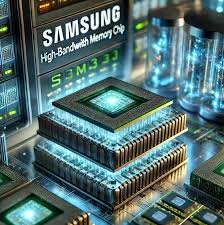
An acute global scarcity of memory chips is driving artificial intelligence and consumer electronics businesses to struggle for shrinking supply, as prices jump for the unglamorous but critical components that allow devices to retain data.
Japanese electronics stores have begun limiting how many hard disk drives buyers can buy.
Chinese smartphone manufacturers are threatening to raise prices. Tech giants, including Microsoft, Google, and ByteDance, are scrambling to secure supplies from memory-chip makers such as Micron, Samsung Electronics, and SK Hynix.
From flash chips used in USB drives and smartphones to sophisticated high-bandwidth memory (HBM) that powers AI processors in data centres, the squeeze affects nearly every kind of memory.
Prices in some segments have more than doubled since February, according to market research firm TrendForce, luring in speculators betting that the boom has further to run.
The effects could stretch beyond tech.
Many economists and businessmen say the persistent shortage risks halting AI-based productivity improvements and delaying hundreds of billions of dollars in digital infrastructure.
Additionally, it might increase inflationary pressure at a time when many economies are attempting to control price increases and deal with U.S. tariffs.
“The memory shortage has now graduated from a component-level concern to a macroeconomic risk,” stated Sanchit Vir Gogia, CEO of the technology advising firm Greyhound Research.
The implementation of artificial intelligence is colliding with a supply chain that cannot meet its physical requirements.”
Average inventory levels at providers of dynamic random-access memory (DRAM), the main type used in computers and phones, plummeted to two to four weeks in October from three to eight weeks in July and 13 to 17 weeks in late 2024, according to TrendForce.
Investors are beginning to wonder if the billions of dollars invested in AI technology have created a bubble.
Only the largest and most financially stable businesses will be able to withstand the price rises, according to some analysts’ predictions of a shakeout.
Future data center projects would be delayed due to the shortfall. It takes at least two years to construct new capacity, and memory chip manufacturers are cautious about overbuilding out of concern that it would become idle if the demand spike passes.
Samsung and SK Hynix have announced investments in new capacity but haven’t disclosed the production mix between HBM and traditional memory.
SK Hynix has informed analysts that the memory shortfall would endure into late 2027, Citi stated in November.
“These days, we’re receiving requests for memory supplies from so many companies that we’re anxious about how we’ll be able to handle all of them.
If we fail to supply them, they could face a situation where they can’t do business at all,” Chey Tae-won, chairman of SK Hynix parent SK Group, said at an industry summit in Seoul last month.
In October, OpenAI signed preliminary agreements with Samsung and SK Hynix to provide chips for its Stargate project, which would need up to 900,000 wafers each month by 2029.
According to Chey, that is roughly twice the current monthly HBM production worldwide.
Samsung said that while it is keeping an eye on the market, it would not comment on prices or customer relations. According to SK Hynix, it is increasing production capacity to satisfy the rising demand for memory.
“STARTING WITH SUPPLY”
After ChatGPT’s release in November 2022 triggered the generative AI boom, a global rush to build AI data centres drove memory companies to allocate more manufacturing to HBM, used in Nvidia’s strong AI processors.
Competition from Chinese rivals creating lower-end DRAM, such as ChangXin Memory Technologies, has encouraged Samsung and SK Hynix to speed their migration to higher-margin products. Two-thirds of the DRAM market is dominated by South Korean companies.
Samsung warned customers in May 2024 that it planned to halt manufacture of one type of DDR4 chips — an older variety used in PCs and servers — this year.
In June, Micron said it had warned customers it would stop selling DDR4 and its counterpart LPDDR4 – a kind used in smartphones – in six to nine months.
This change, however, coincided with a replacement cycle for traditional data centres and PCs, as well as stronger-than-expected sales of smartphones, which rely on conventional CPUs.
In hindsight, “one could say the industry was caught off-guard,” said Dan Hutcheson, senior research fellow at TechInsights.
Samsung increased the pricing of its server memory chips by up to 60% last month.
Nvidia CEO Jensen Huang, who in October announced deals and had fried chicken with Samsung Electronics Chairman Jay Y. Lee during a trip to South Korea, acknowledged the price spike as significant but claimed Nvidia had secured substantial supply.
Google, Amazon, Microsoft, and Meta, in October, pushed Micron for open-ended orders, telling the company they would take as much as it could deliver, irrespective of price.
China’s Alibaba, ByteDance, and Tencent are also pressing on suppliers, dispatching executives to visit Samsung and SK Hynix in October and November to argue for allocation.
“Everyone is begging for supply,” one added.
In October, Samsung announced that it had found buyers for its HBM chips to be manufactured the next year, while SK Hynix declared that all of its chips were sold out for 2026. Both corporations are boosting capacity to meet AI demand, but new facilities for conventional chips won’t come online until 2027 or 2028.
Shares in Micron, Samsung and SK Hynix have surged this year on semiconductor demand.
In September, Micron anticipated first-quarter sales above market projections while Samsung in October recorded its greatest quarterly profit in more than three years.
Advanced and legacy memory prices are predicted by consultancy Counterpoint Research to increase by 30% through the fourth quarter and potentially by an additional 20% in early 2026.
SMARTPHONE STICKER SHOCK
Chinese smartphone manufacturers Realme and Xiaomi have issued a warning that they could have to increase their pricing.
Francis Wong, Realme India’s chief marketing officer, said the significant hikes in memory costs were “unprecedented since the advent of smartphones” and could cause the business to lift handset pricing by 20% to 30% by June.
“Some manufacturers might save costs on imaging cameras, some on processors, and some on batteries,” he stated.
“But the cost of storage is something all manufacturers must completely absorb; there’s no way to transfer it.”
Xiaomi said it would offset increasing memory costs by boosting prices and selling more luxury phones, adding that its other operations would help cushion the impact.
Taiwanese laptop manufacturer ASUS stated in November that it had roughly four months’ worth of inventory, including memory parts, and that it would modify prices as necessary.
Winbond, a Taiwanese chipmaker with roughly 1% of the DRAM market, was among the first to announce a capacity expansion to meet demand.
In October, a plan to significantly increase capital expenditures to $1.1 billion was authorised by the board of directors.
According to Pei-Ming Chen, president of Winbond, “many customers have been coming to us saying, ‘I really need your help,’ and one even asked for a six-year long-term agreement.”
TRADERS HURRY IN
In Tokyo’s electronics mecca of Akihabara, retailers are banning purchases of memory equipment to discourage stockpiling.
A sign outside PC shop Ark claims that starting November 1 consumers have been limited to buying a total of eight products among hard-disk drives, solid-state drives and system memory.
Five stores’ clerks said that shortages had caused prices to spike in recent weeks. At some places, one-third of merchandise were sold out.
Products such as 32-gigabyte DDR5 memory – popular with gamers – were over 47,000 yen, up from roughly 17,000 yen in mid-October. Higher-end 128-gigabyte kits had more than doubled to roughly 180,000 yen.
Roman Yamashita, the proprietor of iCON in Akihabara, claims that his business selling used PC parts is flourishing as a result of the hikes sending buyers to the secondhand market.
Eva Wu, a sales manager at component trader Polaris Mobility in Shenzhen, said prices are shifting so rapidly that distributors offer broker-style quotes that expire daily – and in some cases hourly – unlike monthly before the crunch.
A DDR4 vendor in Beijing claimed to have stockpiled 20,000 units in preparation for future price rises.
Some 6,000 miles away in California, Paul Coronado said monthly sales at his company, Caramon, which sells recycled low-end memory chips salvaged from retired data-centre servers, have tripled since September.
Almost all its items are now bought by Hong Kong-based intermediaries who resell them to Chinese buyers, he said.
“We were doing about $500,000 a month,” he stated. “Now it’s $800,000 to $900,000.”