

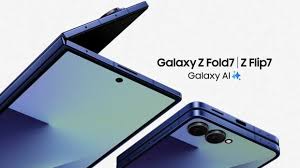
Samsung Electronics intends to double the number of its mobile devices with “Galaxy AI” features this year, primarily driven by Google’s Gemini.
This would offer the American company an advantage over competitors as the worldwide race in artificial intelligence intensifies.
The South Korean corporation intends to increase the number of mobile devices—including smartphones and tablets—that have Gemini-backed AI features to 800 million by 2026. By the end of last year, that number had reached roughly 400 million.
“We will apply AI to all products, all functions, and all services as quickly as possible,” T M Roh stated to reporters in his first interview since taking over as co-CEO of Samsung Electronics in November.
The proposal by the biggest supporter of Google’s Android mobile platform worldwide is expected to provide a significant boost to the company’s developer, Google, which is engaged in a competition with OpenAI and other companies to increase the number of consumers who use their AI model.
Under Roh’s direction, Samsung aims to unseat Apple, develop a new market for smartphones, and fend off competition from Chinese rivals in not just mobile phones but also televisions and household appliances.
Although Apple was predicted by market research firm Counterpoint to be the top smartphone manufacturer last year, it will provide integrated AI services across consumer devices to increase its lead over Apple in such features.
AI RACE
In November, Google released the most recent version of Gemini, emphasizing Gemini 3’s superiority on a number of widely used industry metrics for AI model performance.
OpenAI CEO Sam Altman reportedly declared an internal “code red,” halting non-core projects and rerouting teams to expedite development in response to Gemini 3.
A few weeks later, the company that created ChatGPT released its GPT-5.2 AI model.
Given that Samsung’s Galaxy AI brand recognition increased from roughly 30% to 80% in only a single year, Roh anticipates that AI adoption will accelerate.
“Even though the AI technology might seem a bit doubtful right now, within six months to a year, these technologies will become more widespread,” he stated.
According to him, users often utilize a variety of generative AI editing and productivity tools for photographs and other content, as well as translation and summary functions, even if search is the most popular AI feature on phones.
Samsung refers to its collection of AI capabilities as “Galaxy AI,” which includes features driven by both Google’s Gemini model and Samsung’s own Bixby for various tasks.
Due to a worldwide shortage of chips, Samsung is expected to report a profit increase for the fourth quarter later this week. As a result, the company’s shares ended Monday’s trading session up 7.5%.
“NOT IMMUNE” TO SHORTAGE OF MEMORY CHIPS
Global memory chip shortages benefit Samsung’s core semiconductor business but also put pressure on the company’s second-largest revenue stream, smartphones.
“As this situation is unprecedented, no company is immune to its impact,” Roh stated, noting that consumer gadgets such as TVs and home appliances are also affected by the crisis in addition to mobile phones.
The world’s top TV manufacturer, Samsung, is working with partners on longer-term plans to reduce the impact, but it would not rule out raising product costs, stating that some damage was “inevitable” from a jump in memory chip prices.
The worldwide smartphone industry is expected to contract next year, according to market research firms like IDC and Counterpoint, as the scarcity of memory chips threatens to raise phone costs.
According to Roh, the market for foldable phones—which Samsung invented in 2019—has been expanding more slowly than anticipated.
He said that the lack of applications appropriate for the hardware design and the engineering complexity were the reasons behind this. Still, he anticipated that the market would become popular within the next two to three years.
He stated that a “very high” percentage of foldable phone customers choose the same category for their subsequent purchases, but he provided no specifics.
According to Counterpoint, Samsung held approximately two-thirds of the foldable smartphone market share in the third quarter of 2025.
However, Apple, which is anticipated to release its first foldable phone this year, and Chinese firms like Huawei are competitors.