
Elon Musk’s mega-merger of his companies xAI and SpaceX this week takes this sci-fi ambition one step closer.
Seventy-five years ago, the idea of harnessing the power of the skies was little more than a fantasy spun by futurists like Arthur C. Clarke and Isaac Asimov.
For almost 20 years, NASA engineers and technologists have been speculating about transporting energy-intensive computation outside the Earth.
Big Tech companies like Alphabet and Jeff Bezos’ Blue Origin have recently taken notice of the concept. The solar energy was plentiful, and the physics made sense. Nevertheless, the obstacles appeared insurmountable.
However, Musk, who is renowned for placing bets on seemingly unrealistic hypotheses and seeing them through to completion, might be setting the stage for the eventual realization of data centers in space.
He has an AI firm, the busiest satellite launch fleet in the world, and a voracious thirst for infrastructure that reaches from Earth to space.
“Clearly, the only way to scale in the long run is with space-based AI,” Musk stated on Monday.
It would take more than a million times as much energy as our civilization currently consumes to capture even a millionth of the energy from our Sun!
Therefore, moving these resource-intensive initiatives to a place with a lot of power and room is the only sensible solution.
The acquisition makes investors more focused on how he might get over significant obstacles by using a complex network of satellites, rockets, and AI systems to expand AI infrastructure beyond Earth.
It coincides with SpaceX’s preparations for a possible $1.5 trillion initial public offering.
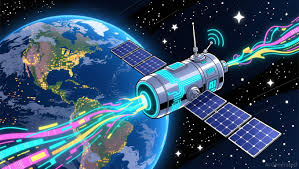
SpaceX has requested authorization to launch up to one million solar-powered satellites designed as orbital data centers, which is significantly more than what is already in use or planned.
SpaceX proposes a solar-powered, optical-link-driven “orbital data center system” in a filing with the Federal Communications Commission, but it did not specify how many Starship launches would be necessary to grow the network to an operational level.
“Computing in space isn’t sci-fi anymore,” said David Ariosto, author and founder of space intelligence firm The Space Agency. “And Elon Musk has already proven himself capable across multiple domains.”
NEW ECONOMICS MEET OLD IDEA
Proponents contend that because solar energy is continuous and heat can be dumped directly into space, space-based data centers would be less expensive than data centers on Earth.
However, other experts have cautioned that significant commercial gains are years away due to the concept’s strong obstacles and technical dangers, which include radiation, debris, heat management, latency, and tough economics that include high maintenance expenses.
The founder of Summit Ridge Group, Armand Musey, stated that it was difficult to predict the financial aspects of a project like this, as the “technical unknowns haven’t been clarified.”
“There are some real challenges here, and how do you then make that cost-effective?” Musey asked.
“But never say never,” said Musey, who called Musk’s track record “unbelievable.” “I think a large part of it is, it’s a bet on Elon. His success is really hard for people to ignore.”
Data centers in space might not be possible for another ten years, despite Musk’s aspirations.
Space-based infrastructure is not new in terms of its fundamental physics. In the 1970s, NASA and the U.S. Department of Energy investigated space-based solar power systems during the Cold War and came to the conclusion that they were not feasible due to launch and material costs.
Musk’s initiatives are distinct because his firms have greater direct control over important components of the system, such as the rockets that will transport the gear, the cables that will beam data down to Earth, and a social network that he owns to create demand for inexpensive AI processing.
“SpaceX has structural advantages that few others can match. It controls the world’s most active launch fleet, has demonstrated mass production of spacecraft through Starlink, and has access to substantial private capital,” said Kathleen Curlee, a research analyst at Georgetown University.
RADIATION-BOMBARDING CHIPS
Radiation and cooling are two of the largest problems space data centers face.
The sun’s cosmic rays will attack data center gear. Although space-specific processors were “hardened” to withstand such radiation, they were rarely as quick as today’s top AI chips.
The other challenge is cooling AI chips, which produce enormous amounts of heat while performing calculations.
Heat cannot be carried away as it can on Earth because space is nearly a vacuum, despite its frigid temperatures. Instead, powerful chips have to transfer heat into big radiators that release it as infrared radiation, which increases size, weight, and expense.
In its FCC filing, SpaceX details how satellites that have operational faults quickly de-orbit and explains cooling by “passive heat dissipation into the vacuum of space.”
To determine how well one of Google’s AI chips would withstand a five- or six-year space mission for a research project to network solar-powered satellites into an orbital AI cloud called Project Suncatcher, Alphabet’s Google recently subjected one of its chips to radiation at a university lab in California.
According to Travis Beals, a senior executive at Google and the project’s lead, “They held up quite well against that.” The project is scheduled to launch a prototype into space in 2027.