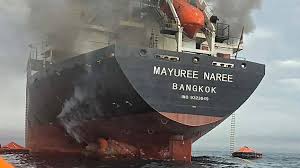

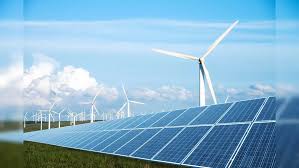
Calls for accelerating the transition to renewable energy are becoming more urgent as the war in Iran highlights the world’s dependence on precarious fossil fuel pathways.
Oil shipments via the Strait of Hormuz, a small waterway that transports roughly a fifth of the world’s oil and LNG, have all but stopped due to fighting.
Energy markets have been rocked by the disruption, which has raised costs and put pressure on economies that rely on imports.
Asia, where the majority of the oil was intended, has been most severely impacted, but Europe, where authorities are searching for methods to reduce energy demand, and Africa, which is preparing for rising fuel prices and inflation, are also feeling the effects of the interruptions.
In many areas, renewable energy is now competitive with fossil fuels, unlike during earlier oil shocks.
International Renewable Energy Agency said, over 90% of new renewable power projects globally in 2024 were less expensive than fossil fuel substitutes.
Beyond producing energy, oil is utilized in a variety of industries, including the manufacturing of polymers and fertilizer.
As a result, the majority of nations are experiencing the effects, but those with higher levels of renewable energy are better off since they rely on local resources like the sun and wind rather than imported fuels.
James Bowen of the Australian consultancy ReMap Research said, “these crises occur regularly.” “They are a feature of an energy system based on fossil fuels, not a flaw.”
The two most populous nations in the world, China and India, both developed renewable buffers, but China’s is greater.
They both struggle to produce enough electricity to support growth for more than a billion people.
While both countries have increased their use of renewable energy, China has done so far more extensively despite its ongoing reliance on coal-fired power.
China is currently the global leader in renewable energy.
The International Energy Agency said, about 10% of cars in China are electric. It continues to be the top customer of Iranian oil and the world’s largest importer of crude oil.
However, its reliance on imports has decreased as a result of powering portions of its economy with renewable energy.
Lauri Myllyvirta of the Centre for Research on Energy and Clean Air said China would be “far more vulnerable to supply and price shocks” in the absence of that change.
He added that China can switch between utilizing coal and oil as fuel in manufacturing and rely on reserves that were established when prices were low.
India has also increased its usage of clean energy, particularly solar electricity. However, it has done so more slowly and with less government assistance for producing renewable energy equipment and integrating solar power into the country’s electrical system.
India made energy security a top priority following Russia’s invasion of Ukraine in 2022 by increasing coal production and purchasing cheap Russian oil.
Additionally, it increased wind and solar power, which helped to mitigate but not completely prevent supply outages, according to Duttatreya Das of the think tank Ember.
Das stated, “Not everyone can be China.”
Cooking gas is currently in short supply in India. This is causing a rush to purchase induction cooktops and increasing concerns about restaurant closures. The ceramics and fertilizer industries can also be affected.
Wealthy nations rely on fossil fuels
Rich nations in Europe and East Asia are familiar with the energy shock.
Some European governments attempted to reduce reliance on fossil fuels in 2022.
However, many quickly turned their attention to locating new fossil fuel supplies, according to Pauline Heinrichs, a climate and energy researcher at King’s College London.
As the energy shift, including attempts to reduce consumption, lagged, Germany hurried to construct LNG facilities to replace Russian gas with primarily American fuel, she claimed.
According to a 2023 analysis, Europe’s extra fossil fuel spending since the Russia-Ukraine War amounts to over 40% of the investment required to switch its power system to sustainable energy.
Heinrichs stated, “We learned the wrong lesson in Europe.
Ayumi Fukakusa of Friends of the Earth Japan said that official responses to previous shocks in import-dependent Japan have concentrated on diversifying fossil fuel imports rather than investing in indigenous renewable energy.
According to Ember, just 11% of Japan’s energy comes from solar and wind, which is comparable to India but less than China’s 18%. Japan uses a lot less energy than both countries.
During this week’s meeting between U.S. President Donald Trump and Japanese Prime Minister Sanae Takaichi, the Iran war dominated the topic.
Trump recently pushed allies like Japan to “step up” in helping to safeguard the Strait of Hormuz. Trump has long urged Japan to purchase more American LNG.
Lee Jae-myung, the president of South Korea, stated that the situation might present “a good opportunity” to switch to renewable energy more quickly.
The most vulnerable nations are those in poverty.
Prices are rising as poorer countries in Asia and Africa compete for scarce gas sources with wealthier European and Asian nations, as well as large consumers like China and India.
Economies that rely heavily on imports, like Bangladesh and Thailand in Asia and Benin and Zambia in Africa, may be particularly vulnerable.
Costly gasoline raises the cost of food and transportation, and if prices remain high, many nations’ low foreign exchange reserves will make it difficult for them to pay for imports.
Because many African nations depend on imported oil to power their supply and transportation networks, the continent may be particularly vulnerable.
Kennedy Mbeva, a research associate at the University of Cambridge’s Centre for the Study of Existential Risk, stated that it makes strategic sense for African nations to invest in cleaner energy to increase their long-term energy security.
However, not everyone is choosing renewable energy:
South Africa is thinking about constructing new gas-fired power plants and an LNG import facility.
Others are stepping up their use of renewable energy, such as Ethiopia, which outlawed gasoline and diesel-powered vehicles in 2024 to encourage electric vehicles.
Hanan Hassen, an analyst at Ethiopia’s government-affiliated think tank, the Institute of Foreign Affairs, said the real issue is not only to survive the next shock but also to make sure it doesn’t “derail the country’s development trajectory.”
For some, renewable energy sources act as a buffer.
Some Asian nations have been protected from the energy shock by increased use of renewable energy.
The think tanks Renewables First and the Centre for Research on Energy and Clean Air said that Pakistan’s solar growth has prevented more than $12 billion in fossil fuel imports since 2020 and could save an additional $6.3 billion at current rates in 2026.
The research organization Zero Carbon Analytics said that Vietnam’s present solar generation would save the nation hundreds of millions of dollars in potential coal and gas imports in the upcoming year due to current high costs.
Other nations are stretching their limited resources.
Bangladesh has shut down its universities to conserve electricity.
Khondaker Golam Moazzem, an economist at the Centre for Policy Dialogue in Dhaka said, the government began restricting fuel after a wave of panic buying at gas stations because it has limited storage capacity to absorb supply shocks.
For the time being, governments only need to regulate pricing and shortages. Thailand has increased its gas output, stopped exporting petroleum, and started using its reserves.
Areeporn Asawinpongphan, a research fellow at the Thailand Development Research Institute, said prices may skyrocket if the conflict continues into April due to Thailand’s limited reserves and budget for subsidies.
Asawinpongphan stated that “the time for promoting domestic renewables should have happened a long time ago.”