
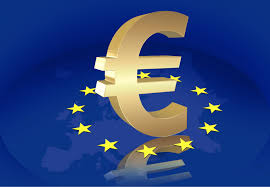
Bulgaria advances its integration into the European Union on New Year’s Day by becoming the 21st nation to join the euro currency union.
However, the momentous occasion coincides with political unrest and public skepticism stoked by concerns about price increases.
The transition from the previous currency, the lev, to the euro is being hailed by proponents as one of the biggest successes since the 1989 shift from a Soviet-style economy to democracy and free markets.
They expect it will enhance the nation’s tilt towards wealthy Western Europe and make it more appealing to investors.
However, in a nation where corruption is pervasive and public confidence in the government is low, many people are concerned.
At a time when inflation has recovered to 3.7%, one concern is that retailers would use the shift to increase prices or in some other way exacerbate inflation.
According to a March EU Eurobarometer survey, 53% of 1,017 respondents were against entering the eurozone, while 45% supported it.
About half of Bulgarians were against the single currency, while 42% supported it, according to a different Eurobarometer survey conducted on a similar sample between October 9 and November 3. For the March survey, the margin of error was roughly 3.1 percentage points.
While some applaud the euro, others are cautious.
To comply with EU regulations and get the support of EU leaders, the administration successfully finished the euro adoption process earlier this year by bringing inflation down to 2.7%.
However, overcoming that obstacle was followed by a new round of political unrest.
In the midst of countrywide anti-corruption demonstrations, the government resigned after less than a year in power.
Plans for long-overdue structural reforms and choices for the use of EU support funds are being hampered as a result, and the nation will not have a normal budget for the upcoming year.
Next spring, a fresh election is anticipated, the seventh in five years.
The 64-year-old Nevelin Petrov expressed his approval of the euro. He declared, “Bulgaria is a full member of the European Union, and its rightful place is alongside the other developed and democratic European nations.”
He declared, “I am convinced that the adoption of the euro will contribute to the long-term prosperity of our country.”
Others, such as Darina Vitova, who owns a pedicure shop in Sofia, praised the shift “in principle” but claimed it was happening too quickly.
“While prices are rising and life for the average person will become more difficult, the standard of living and incomes in our country are far from those in the richest European countries,” she stated.
She admits that using the same “pocket money” she uses at home will be handier when visiting the beaches in nearby Greece.
With 6.4 million citizens, Bulgaria is among the poorest of the EU’s 27 member states. The average salary is 1,300 euros ($1,530) a month.
Although countries who join the EU pledge to use the euro, some members are not in a rush, and joining can take years.
Since entering the EU in 2004 without adopting the euro, Poland, in particular, has had robust economic growth.
Politicians who support Russia have stoked unrest.
Fears that the changes will supposedly result in increased poverty and a loss of national identity have been stoked by opponents of joining.
False accusations that the euro could result in bank account confiscation have been disseminated via social media. These anxieties are exploited by pro-Russian and nationalist organizations.
According to Christine Lagarde, president of the European Central Bank, countries saw a brief, 0.2%–0.4% increase in prices immediately after joining.
Because cafes and hairdressers may delay publishing new menus and pricing lists in advance of the change, price hikes may appear more obvious than they actually are. This is because the euro is not the reason of the delays.
The pro-Russian Vazrazhdane party organized anti-EU demonstrations in May and September, but they were not as large as the large-scale demonstrations that overthrew the government.
The large-scale demonstrations that overthrew the government seemed to reflect a younger electorate fed up with corruption and ready to join with Europe, whereas elderly people supported the anti-euro protests due to economic anxiety.
Adoption of the euro, according to analysts, offers a strategic advantage
Dimitar Keranov, program coordinator for engaging Central Europe at the German Marshall Fund in Berlin, stated that the goal of anti-EU misinformation propagated by pro-Russian politicians and social media is “to reduce support for the European Union, NATO, and Ukraine.”
According to him, Bulgaria’s European integration “is not in Moscow’s interest at all, so if it can somehow polarize society and weaken support for the European Union, that’s what it tries to achieve.”
“The further Bulgaria advances in its European integration, the harder it becomes for Russia to influence the country,” he stated, adding that adopting the euro is another strategy to counter Russian influence.
According to Petar Ganev, an expert at the Institute for Market Economics in Sofia, the outgoing government’s resignation has given foreign investors cause for concern.
In an interview with reporters, Ganev stated, “We risk sending the opposite message instead of capitalizing on euro adoption as a strong and positive signal to the international community—investors, debt holders, and those who are investing in Bulgarian assets and economic activity.”
Although it cannot end Bulgaria’s ongoing cycle of elections, political division, and instability on its own, Ganev thinks that joining the eurozone should be seen as a chance and an extra tool to address corruption and the rule of law.
The economic impact can be minimal.
According to local economists, Bulgaria’s economy won’t undergo significant changes as a result of entering the euro. This is because the lev has been legally set at a rate of one lev for every fifty-one euro cents since 1999.
For the whole month of January, consumers will be able to make cash payments using both the lev and the euro, but they will only get euros in change.