

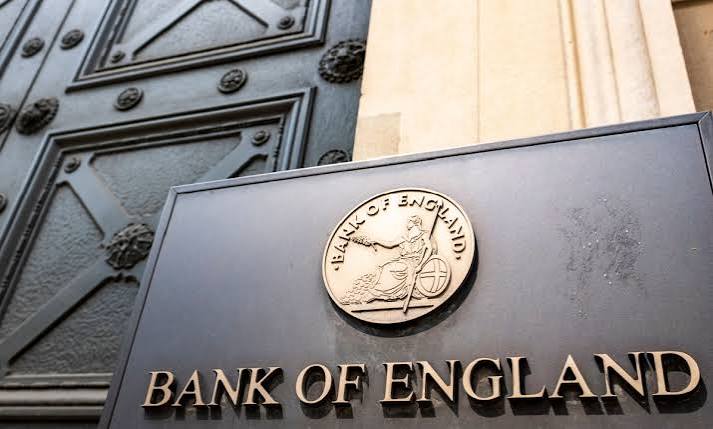
On Thursday, the Bank of England warned that threats to the global financial system have grown over the past few months. It pointed to the ongoing Middle East conflict, which has fueled higher inflation and interest rates at a time when AI firms and governments are borrowing heavily.
The central bank added in its twice-yearly Financial Stability Report that, even after recent steep drops in share prices driven by doubts about AI companies’ prospects, equity valuations still appeared “stretched” and remained heavily reliant on AI delivering the profits investors are counting on.
The Bank of England also flagged concern over the intricate borrowing arrangements funding the build-out of AI and data centers. It warned that the fast-growing financing behind the boom is becoming ever more tangled, self-referential, and hard to see into, which raises the odds that trouble in one corner could spread to others.
Buy COMPLETE GLOBAL TRADE MASTERY @ https://selar.com/p/51175y15ag?affiliate=t3ke
According to the BoE, the big “hyperscalers” constructing AI data centers were set to issue upwards of $305 billion in debt this year, and the sector’s overall bond and loan issuance outstripped what most governments, the UK included, borrow in a year.
Even so, the mounting global risks did not stop the central bank from unveiling plans on Thursday to lower capital requirements for British lenders that focus mainly on the domestic market.
Making sure the UK financial system could withstand a souring of investor sentiment toward AI was a leading priority for the Bank of England, Deputy Governor Katharine Braddick said at a press conference. She described it as a very active area of the bank’s supervisory work.
Buy E-COMMERCE BUILDER BUNDLE @ https://selar.com/p/r78po4856y?affiliate=3bl5
Governor Andrew Bailey chose not to say whether the upheaval at the top of chipmaker Nvidia pointed to wider shortcomings in US corporate governance that might spill over into financial risks. He did point out, though, that senior finance executives in Britain face tougher regulatory scrutiny of their behavior and said he felt the UK had made sound decisions in that area.
Cyber risks stay at the top of the BoE’s worries.
The Bank of England also highlighted threats from cutting-edge AI models and, further down the line, from quantum computers able to crack the encryption methods in widespread use today. It said the most pressing stability priority is a smooth, well-ordered shift to quantum-resistant cryptography.
Bailey argued that countries, including China, need to work more closely to test new AI models before and after launch. Since national borders don’t confine AI, he said, these problems have to be addressed jointly.
Buy CHINA IMPORTATION MASTERCLASS @ https://selar.com/p/9c5884f481?affiliate=98wu
Under current guidance, banks should move their highest-priority systems to quantum-resistant cryptography by the end of 2031 and everything else by the end of 2035. The BoE said the firms most important to the system as a whole should try to beat those dates.
The bank added that the recent outages at Microsoft and Google’s cloud services underlined why financial institutions should avoid depending on one provider for critical software.
Last month the BoE raised interest rates for the first time in over three years. Markets currently put the odds of another hike next month at 80%, with two more expected in 2027, a year in which the BoE forecasts inflation approaching 5%.
The Bank of England estimates that around 6.5 million UK households will probably see their mortgage payments climb over the next three years, by a median of £100 ($131) a month. That’s a smaller jump than households faced in 2023 and 2024, the last time rates rose sharply.
Buy varied products @ https://selar.com/m/Ltrust?affiliate=tyvl
Still, a little over a million households that locked in their deals before the 2022 rate increases are looking at a bigger median rise of £200 a month within the next year.
Overall, the BoE concluded that household finances are holding up well, with debt levels and repayment costs sitting below where they were ahead of the previous financial crisis.