
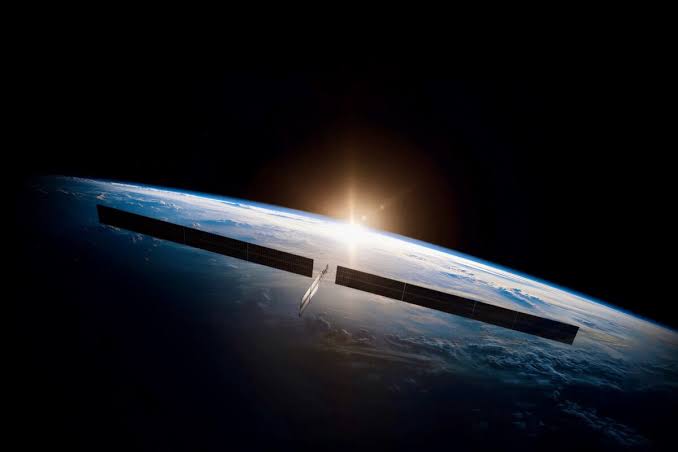
On Wednesday, the Trump administration approved SpaceX’s plan to put 1 million satellites in orbit as space-based data centers, a long-time ambition of Elon Musk’s company. Some scientists have responded with doubt and even alarm.
The Federal Communications Commission called the approval a historic first in the AI race. It said the “orbital compute modules,” which would form a constellation called “Starmind,” would crunch huge volumes of data for use on Earth and move humanity closer to tapping the sun’s full power.
Buy COMPLETE GLOBAL TRADE MASTERY @ https://selar.com/p/51175y15ag?affiliate=t3ke
FCC Chairman Brendan Carr, a Trump appointee, said the U.S. is leading the world into the age of superintelligence and that the decision opens a bold new frontier.
In a longer authorization order, the FCC said SpaceX must launch at least one approved space station by 2033, then steadily expand its fleet through 2040. Musk celebrated the ruling on social media.
The billionaire has long promised huge solar-powered data centers in orbit to run AI tools back on Earth. Scientists and industry experts, however, point to major technical and financial hurdles, along with a range of environmental worries.
Astrophysicist and author Adam Becker dismissed the idea of putting a million data-center satellites in orbit as “a fantasy,” adding on Wednesday that it simply won’t happen.
Buy E-COMMERCE BUILDER BUNDLE @ https://selar.com/p/r78po4856y?affiliate=3bl5
Backers of orbital data centers say harvesting solar energy in space would take strain off power grids and reduce the need for huge computing facilities on Earth, along with the water used to cool them.
Space may look like a natural fit because it’s cold, but it’s also a vacuum, which holds heat inside objects the way a thermos does. Becker said there are “basic physical limits” on how much heat can be shed, and while spreading the hardware across many smaller satellites could get around that, it would be costly and hard to pull off.
He and others also flag other dangers, including air pollution from launches and reentries and the chance of collisions in orbit that could damage vital satellites.
Buy CHINA IMPORTATION MASTERCLASS @ https://selar.com/p/9c5884f481?affiliate=98wu
Becker warned of a chain reaction of space junk crashes that could leave a cloud of debris in low Earth orbit, where many weather and telecommunications satellites operate.
The FCC ruled that SpaceX’s Starmind constellation complies with its orbital debris rules. It noted that it had received a “substantial number” of public comments before Wednesday’s approval, including petitions to reject the request, but said the deployment “serves the public interest.” The agency added that it set aside issues outside its authority, such as environmental concerns.
Among those urging the regulator to turn down the proposal were the American Astronomical Society, satellite communications firm Viasat, and Amazon-owned Kuiper Systems.
The AAS said in a Wednesday statement that it was “disheartened and dismayed” by the FCC’s decision. It argued that placing SpaceX’s data centers in low Earth orbit would erode decades of federal investment in astronomy facilities, as well as the ability of both scientists and the public to enjoy and study the night sky.
Buy varied products @ https://selar.com/m/Ltrust?affiliate=tyvl
The group explained that the planned constellation would include bigger, and therefore brighter, objects in far greater numbers, meaning the satellites would appear as very bright points in the sky for longer stretches of the night.
Becker agreed, adding that the satellites would also pollute the night sky for anyone looking up with the naked eye.