
The historic stock debut of Nigeria’s Dangote refinery was promoted as a chance for continental investors to own a piece of Africa’s largest refining complex and support regional industrial growth.
However, according to the prospectus, the $1.6 billion share sale was strictly registered as a public offering within Nigeria.
This left external buyers to navigate their own domestic regulations or seek out workarounds via a limited number of approved online financial platforms.
Buy CHINA IMPORTATION MASTERCLASS @ https://selar.com/p/9c5884f481?affiliate=98wu
The gap between the Dangote refinery’s continental ambitions and its weak adoption outside Nigeria highlights how Africa’s divided financial markets restrict cross-border investing.
Because the IPO was only approved by Nigeria’s Securities and Exchange Commission, it lacked legal authority abroad, exposing the regulatory friction blocking pan-African deals.
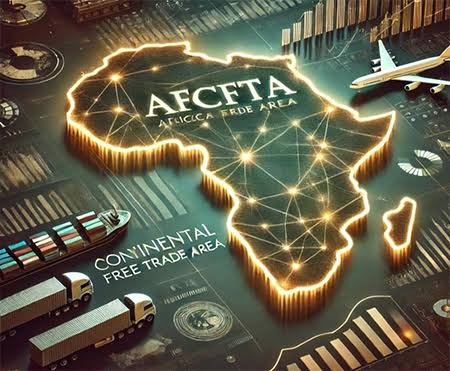
While majority owner Aliko Dangote dismissed these multi-jurisdictional rules as mere “teething problems,” the situation underscores a deeper issue: despite free trade milestones like the AfCFTA, Africa still lacks a unified framework to regulate cross-border stock issuances.
Aliko Dangote expressed confidence that this situation would push regional financial hubs to update their frameworks, simplifying cross-border investing down the road.
He emphasized that the ultimate goal is to foster genuine collaboration among African capital markets.
Regarding a proposed refinery project in Lamu, Kenya, Aliko Dangote stated that it ought to debut on the Nairobi Securities Exchange and be available to investors continent-wide, which would naturally drive the integration of Africa’s financial markets.
Buy varied products. @ https://selar.com/m/Ltrust?affiliate=tyvl
He emphasized that his goal is to significantly deepen these markets. Dangote noted that continental interest in the shares was robust, asserting that investors in Kenya and Botswana alone had the capacity to completely buy out the offering, while acknowledging that issuers continuously receive updates from advisers and brokers throughout the process.
With a mere eight days remaining in the subscription window, Kenya’s market regulator announced approval for a public offering of Global Depositary Receipts (GDRs) tied to the IPO.
Aliko Dangote revealed his ambitious goal to attract 10 million shareholders for the refinery—a target that would double the retail investor turnout achieved by Saudi Aramco during its massive 2019 stock debut.
International stock exchanges, including the Nairobi Securities Exchange, faced week-long regulatory delays trying to join the IPO.
This bottleneck left eager investors sidelined, with many blaming mismatched regional regulations for missing out entirely.
Kenyan financial researcher Sultan Mwangi, who had earmarked $5,000 for the sale, noted widespread extreme disappointment.
The situation highlights why Africa’s capital markets remain heavily fragmented—lagging behind regional integration and local savings initiatives seen in Latin America and Asia—leaving investors to contend with a messy patchwork of national rules and mismatched market infrastructure.
Buy E-COMMERCE BUILDER BUNDLE @ https://selar.com/p/r78po4856y?affiliate=3bl5
In Rwanda, investors faced additional friction by being required to register directly with the market regulator prior to requesting shares.
Celestin Rwakumbuka, CEO of the Rwanda Stock Exchange, noted that while local intermediaries could assist eligible buyers, the final registrations remained anchored in Nigeria.
Despite these hurdles, Hannah Ryder of the consultancy Development Re-imagined highlighted that the Dangote refinery IPO successfully proves Africa’s capacity to fund its own industrial growth—shifting away from historical mega-deals that strictly favored banking and telecom sectors.
However, Ryder added that the actual execution fell short of its initial pan-African scale.
Conceptually, she emphasized that raising significant local capital for a manufacturing asset remains incredibly rare for the region.
The African Development Bank (AfDB) has actively promoted its New African Financial Architecture for Development framework to mobilize domestic savings following a drop in foreign aid.
While this IPO was meant to show how shallow, illiquid regional markets could aggregate capital for massive infrastructure projects, the AfDB declined to comment on the outcome.
The IPO prospectus highlighted massive structural disparities, limiting non-Nigerian African buyers to just two brokerages: Ecobank and SBG Securities (Standard Bank).
While Ecobank reported promising interest spanning East, West, and Central Africa, Standard Bank declined to comment.
Conversely, domestic Nigerian buyers enjoyed 53 different entry points, including traditional banks, brokerages, and modern digital applications.
Fintech leaders argue digital platforms can dissolve these cross-border limits.
Richmond Bassey, CEO of Bamboo, noted that his platform bypasses geographical barriers by routing eligible African and diaspora buyers through a licensed Nigerian nominee.
Aliko Dangote marketed the deal to democratize wealth, setting the minimum buy-in at just 10 shares for 5,250 naira ($3.96).
Despite a steep $50 billion valuation, Lagos entrepreneur Jide Owolabi invested, citing long-term upside in petrochemicals, plastics, and detergents.
Buy COMPLETE GLOBAL TRADE MASTERY @ https://selar.com/p/51175y15ag?affiliate=t3ke
However, skeptics like Ibadan-based financial advocate Peter Oke remained critical, pointing out that alternative equities offer stronger potential returns.