
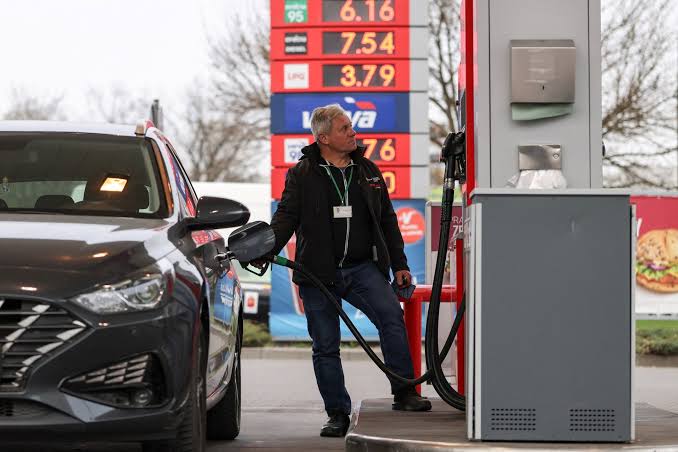
The European Commission stated in a note that governments in the European Union spent €17.9 billion this year to mitigate the impact of rising oil and gas prices on consumers and businesses, and it urged nations to better focus on requirements.
In a note to guide discussions by eurozone finance ministers at an October 8 meeting, the Commission also urged nations to invest in power systems and charge electricity less than gas as an incentive to transition away from fossil fuels.
According to the Commission, economic growth in the euro zone this year will be slightly higher than the 0.9% predicted in May, but it is probably going to be lower than the previous estimate of 1.2% growth next year. It stated that inflation is probably going to stay roughly in line with predictions of 3.0% this year and be higher than the 2.3% previously anticipated in 2027. In the meantime, members have borrowed the commission.
“In this context, since the outbreak of the Middle East Conflict, 25 member states have enacted fiscal policy measures to mitigate the impact of high energy prices on households or firms, with a budgetary cost of €17.9 billion (0.1% of EU-27 GDP) in 2026,” it stated. ” More than two-thirds of the support is on untargeted price measures and hence not in line with the need for short-term measures to be targeted to the most vulnerable, minimize fiscal costs, and be coherent with the need to decarbonize the energy system.”
A worsening energy shock is driving Eurozone bond yields toward multi-year highs and fueling market expectations for at least three European Central Bank interest rate hikes by late 2027. In response to this volatility, the European Commission advised member states that any economic aid provided to businesses and consumers must be short-term, highly targeted, and temporary, drawing from critical lessons learned during the 2022–2023 energy crisis.