
Prime Minister Andy Burnham reiterated his claim that Brexit has “done more harm than good” on Wednesday, saying that Britain should think about options for its future relationship with the European Union, including rejoining the bloc.
Burnham, who supported staying in the EU in a 2016 referendum on membership, made the case that the country should once more examine possibilities for “Britain’s long-term relationship with our European partners” at his Labor Party’s annual conference on Tuesday.
He claimed that rather than “taking back control” as promised by its supporters, Britain’s exit from the bloc had weakened the country, particularly in terms of the economy and handling high immigration levels.
BRITAIN MAY “GO ALL THE WAY.”
Burnham rekindled a contentious argument that has divided the nation for the past ten years when he told the BBC that Britain should think about a number of possibilities for a future relationship, including not only full membership but also entering the EU’s single market or a customs union.
We could continue as we are. “That’s definitely an option, if people think this is the right place to stay,” Burnham stated, enumerating a few choices, one of which was to “go all the way.”
Although Burnham stated in his conference speech that he would “take the opportunity around the summit to lay out to you, to lay out to the country, what I believe the different options are,” it is unclear how he will solicit feedback on the EU.
Following Keir Starmer’s departure as prime minister, an EU-UK meeting was postponed from July 22 to November. However, any official action would have to wait until the next election, which is scheduled for mid-2029.
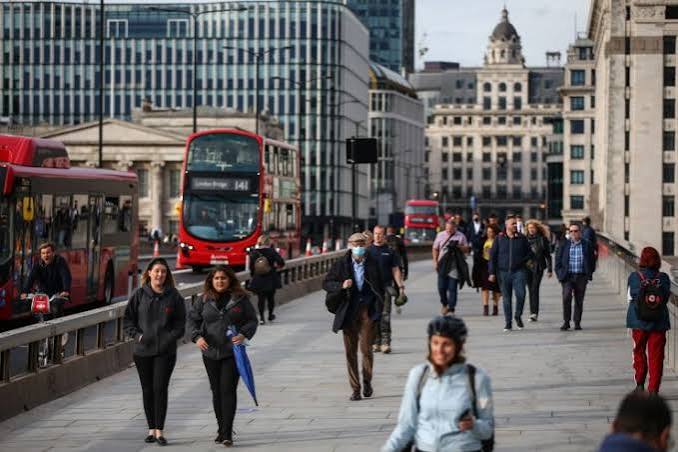
Despite some reservations, the majority of Londoners supported an attempt to rejoin the bloc. Actuary Roy Taylor, 59, stated, “I’m not sure the country needs another Brexit debate all over again, but I’m sort of open to getting closer to Europe.”
Greater Manchester Mayor Andy Burnham stated that options regarding the UK’s relationship with the EU must be assessed based on practical feasibility (“what is doable”) alongside their respective pros and cons.
He confirmed he will remain aligned with Prime Minister Keir Starmer’s 2024 election pledges, explicitly ruling out a return to the EU, the single market, the customs union, or freedom of movement.
A key challenge is whether the EU would accept Britain’s re-entry on terms that align with Burnham’s preferences.
While current polling indicates that most Britons favor rejoining the EU, public support typically drops when faced with mandatory conditions, such as contributing to the EU budget or adopting the euro currency.
Britain’s 2016 vote to exit the European Union concluded over 40 years of membership and sparked a prolonged period of political instability, forcing subsequent governments to manage the resulting economic and diplomatic fallout.
Andy Burnham, who succeeded Starmer in July, expressed a personal desire to see Britain rejoin the EU in his lifetime, and his party conference declaration that Brexit failed to generate wealth resonated strongly with many within the Labour Party.
Andy Burnham bluntly told the BBC that Brexit has done more harm than good, arguing that the focus must now shift to resolving these issues.
Conversely, Nigel Farage’s populist Reform UK rejected Burnham’s stance, blaming the nation’s sluggish economic growth on the Labour government’s policies rather than the decision to leave the EU.
Reform’s deputy leader, Richard Tice, accused Burnham of attempting to surreptitiously realign the UK with Brussels shortly after taking office as prime minister.