
In an agreement anticipated to increase bilateral commerce, the United States and China on Monday revealed reciprocal lists of goods worth around $30 billion each that will receive tariff reductions, ranging from Chinese toys to American hair products.
The information was released a few days after Chinese President Xi Jinping, making his first official visit to the United States since 2015, met with President Donald Trump in Washington.
As tensions between the two nations subsided, the U.S. had already lowered tariffs against China, following Trump’s tariffs, which at one time last year reached 145%.
According to a statement from China’s commerce ministry, the deal will improve trade cooperation. The majority of country-specific levies were essentially eliminated.
The lists contained 1,619 U.S. goods entering China, including medical equipment, lumber, hair and personal care products, and agricultural commodities. There will also be coal from the United States.
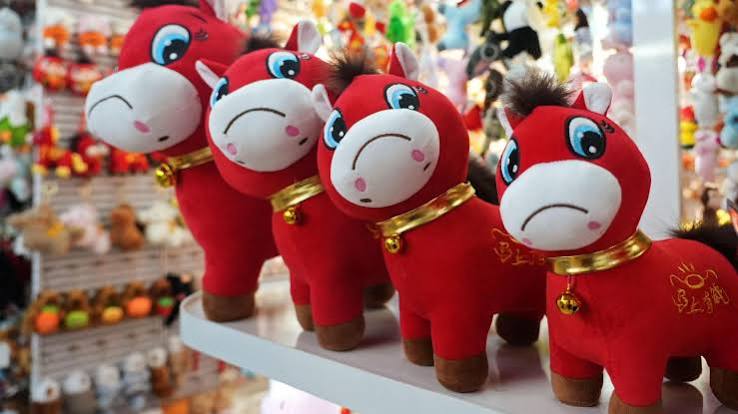
Fireworks, crockery, toys like dolls and puzzles, glass and wooden Christmas ornaments, and soccer balls were among the 77 categories of Chinese items sold to the United States.
According to the Chinese commerce ministry, tariff rates on more than 90% of the products would be subject to “most-favored-nation” levels, thereby eliminating country-specific levies.
The standard tariffs imposed under WTO regulations are known as most-favored-nation rates, but they can vary from item to item and are frequently in the single digits.
In a different statement, U.S. Trade Representative Jamieson Greer said that the product lists concentrated on “nonsensitive goods on each side that could benefit from more favorable tariff treatment.”
According to Greer, the agreement could help guarantee market access for American workers, firms, farmers, and manufacturers while benefiting American customers who purchase toys and home items from China.
Both nations stated that they agreed that the list might be changed in the future, if necessary, but that changes would probably only occur once a year.
According to the Chinese commerce ministry, the two nations have agreed to expand their agricultural cooperation by launching a dedicated group under the Board of Trade—which was set up in May—to enhance bilateral trade.
However, the agreement excluded key strategic sectors such as semiconductors, electric vehicles, and batteries.
According to experts, the tariff reductions could provide a substantial lift to US-China trade.
Lynn Song, chief economist for Greater China at ING Bank, noted that the move is highly positive compared to minor tariff cuts and could drive a more meaningful expansion in bilateral commerce.
Furthermore, Jacob Cooke, CEO of Beijing-based WPIC Marketing + Technologies, indicated that the decision is a win for U.S. consumer brands, particularly those in rapidly expanding markets like hair care, personal care, and infant formula.
Gary Ng, a senior economist at Natixis, suggested that because the U.S. tariff cuts target consumer items, the move could reduce U.S. inflation while enabling Chinese companies to export excess inventory.
On the other hand, some experts point out that the overall economic effect may be minimal given that the trade volume is capped at $30 billion per side.
U.S. exports to China reached approximately $68 billion during the first seven months of the year, whereas Chinese exports to the U.S. totaled roughly $270 billion over the first eight months, according to Prashant Bhayani, chief investment officer for Asia at BNP Paribas Wealth Management.
Bhayani noted that a $30 billion trade deal per side will represent a proportionally larger and more meaningful increase
for U.S. exports compared to Chinese exports.
China’s trade surplus is projected to stay historically high, potentially surpassing last year’s record $1.2 trillion, as the year-to-date surplus already climbed to roughly $800 billion by August, according to Ecaterina Bigos, a senior market strategist with BNP Paribas Asset Management.
Despite excluding sensitive strategic items, bilateral trade is poised for a steady year-end recovery following severe U.S. tariffs that disrupted commerce last year.
This ongoing recovery is further supported by a recent two-month extension of the broader U.S.-China trade truce, pushing its expiration date from November 10 to January.
The U.S. Section 301 investigation into industrial overcapacity—which includes China among 16 scrutinized trading partners—could result in new American tariffs once the probe wraps up.
Despite this looming risk, ING Bank economist Lynn Song notes that trade friction is unlikely to escalate significantly before the end of the year.
This expected stability is anchored by upcoming high-level diplomacy, as Donald Trump and Xi Jinping are scheduled to meet again at November’s APEC summit in Shenzhen and December’s G20 summit in Florida.
Chinese exporters have responded positively to the newly announced tariff agreement.
Richard Chan, a representative of Golden Arts Gifts & Decor—a southern China-based manufacturer that supplies Christmas decorations to the U.S. and other markets—called the deal positive news, emphasizing that because both the American and Chinese economies are currently struggling, the two nations need to cooperate more closely.
Because most of this year’s holiday merchandise has already shipped ahead of the peak shopping period, the newly announced tariff reductions will likely offer little immediate benefit to current Christmas orders.