
The head of the World Trade Organization stated on Wednesday that rising global demand for essential minerals should be “a once-in-a-lifetime chance” for resource-rich nations in Africa and elsewhere to harness wealth and better millions of people’s lives, but it has all too readily sparked war and poverty.
“Critical minerals are increasingly viewed as strategic assets, not just commodities, and a major source of interstate competition,” WTO Director-General Ngozi Okonjo-Iweala cautioned the U.N. Security Council.
Major economies are rushing to obtain a supply of the minerals required for everything from cellphones to fighter jets to use as leverage.
There is a genuine risk that disputes will escalate and emerging economies will be forced to operate at the lowest level of output while “the highest value jobs, technologies, and profits go elsewhere.”
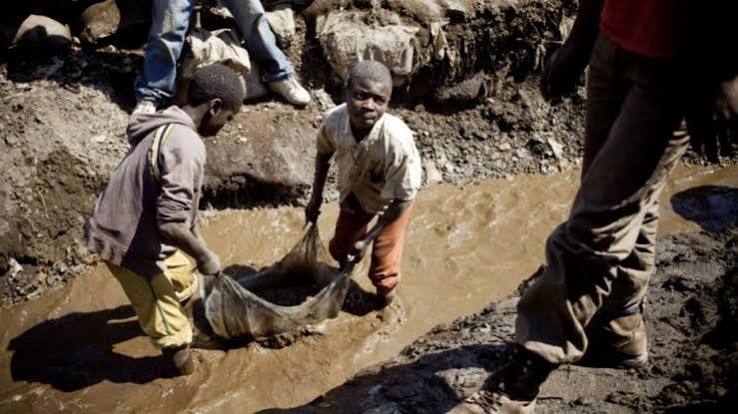
The U.N. Secretary-General, Antonio Guterres, stated that armed groups have benefited from illicit mining and mineral smuggling in eastern Congo due to rivalry for lithium, cobalt, nickel, and rare earths, and civilians have paid the price of the ongoing conflict.
He informed the council that the exploitation of natural resources, particularly gold and gum arabic used in printing, paints, glues, cosmetics, and other industries, has fueled the fierce struggle between government and paramilitary forces in Sudan for political and territorial dominance, “leading to atrocities and displacing millions.
Okonjo-Iweala said that “the minerals beneath the soil of Africa or any developing region should never help to finance the conflicts above it.”
There is a genuine chance to establish “a more diversified, inclusive, and win-win global economy” in which natural wealth is not only mined and shaped overseas but also serves as a catalyst for economic change.
Three priorities were suggested by her:
1. More local processing, refining, and “value addition” should be demanded by resource-rich emerging nations.
2. Strengthening the international rule of law is necessary.
3. Most importantly, resource-rich nations should cooperate and utilize their influence to encourage investment and reverse the import of completed goods and the export of raw resources.
Okonjo-Iweala stated that, “without them, the world cannot achieve energy security, the green transition, or digital transformation.” “Less than half of Africa’s mineral reserves have been explored, and the continent alone contains about 30% of the world’s critical minerals.”
South Africa has the world’s greatest reserves of platinum and manganese, Congo produces more than 70% of the world’s cobalt, and Zambia and Congo are significant producers of copper. Ten to twelve African nations have commercially viable lithium reserves, while fifteen to twenty have commercially viable rare earth deposits.