
At the request of President Donald Trump’s administration, ChatGPT manufacturer OpenAI said on Friday that it is limiting the rollout of its new AI model.
This is the latest in an unprecedented government screening of AI products for cybersecurity threats.
Two weeks after the U.S. Commerce Department essentially outlawed it, Anthropic, its main competitor, declared hours later that the Trump administration had authorized a limited release of its strongest cybersecurity model.
Both businesses stated that small groups of reliable partners will get access to their most recent models. GPT-5.6 Sol, OpenAI’s new AI product, will only be available to clients authorized by the Trump administration.
In a statement, OpenAI stated, “We don’t think this kind of government access process should become the long-term default.” According to the corporation, the testing phase is merely a stopgap measure on the “path to broader availability in the coming weeks.”
The government’s moves against Anthropic, the company that created the Claude chatbot, earlier this month, are followed by OpenAI’s phased release of a potent new AI system.
Days after releasing two new AI models, Fable 5 and Mythos 5, Anthropic took them offline to comply with a Trump mandate prohibiting their usage by foreign nationals.
One of those models, Mythos 5, had restrictions lifted by the government on Friday, allowing it to be “redeployed to a small group of cyber defenders and infrastructure providers,” Anthropic said.
The White House announced on Friday that it is still working with cutting-edge AI labs to address the difficulties in scaling the rapidly developing technology.
Since Anthropic warned earlier this year that their Mythos model was skilled at identifying software weaknesses in a way that may be leveraged by malevolent hackers and endanger vital computer networks worldwide, officials’ concerns have escalated.
New, potent AI models have received White House scrutiny.
Trump issued an executive order on AI oversight earlier in June, establishing a framework for the federal government to assess the national security dangers of the most sophisticated AI systems for up to 30 days before their public release.
Although the framework is still in its early stages of development, the directive said that involvement by AI developers is voluntary.
Dario Amodei, the CEO of Anthropic, a San Francisco-based company, has been blamed by some of Trump’s supporters for the necessity for increased government oversight.
In a recent podcast, businessman David Sacks, who co-leads Trump’s council of technology and scientific advisers, stated,
“Dario came to Washington a few months ago, back in April, and basically said that he had created a cyber weapon called Mythos.”
And he caused a cortisol increase, which alarmed everyone. Additionally, there was some validity to the idea that this model has sophisticated cyber capabilities.
The San Francisco-based business OpenAI said that its new Sol model, pronounced “SOHL” like the Spanish word for sun, is better at helping people find and fix vulnerabilities than it is at launching cyberattacks and does not exceed the company’s own risk threshold.
However, it admitted that there might be unanticipated dangers, particularly if their model is used in conjunction with other technologies.
“We are pairing the model’s increased capabilities with stronger safeguards and a phased release because of this uncertainty and the model’s broader step change in capabilities,” the business stated on Friday.
The approximately 20 clients who have been permitted to adopt the new model thus far have not been named by OpenAI.
Opponents caution that erratic government action could hinder US businesses.
In a statement, U.S. Representative Lori Trahan, a Democrat from Massachusetts and co-author of a bipartisan bill to govern artificial intelligence, expressed worry that “the Trump administration is deciding company by company who gets access to the newest AI model.”
No legislation. No procedure. No supervision. Who is in and who is out in Washington is solely determined by appointees.
The government’s measures that forced Anthropic to shut down Fable, which the business had marketed as a safer version of Mythos, have also drawn criticism from a wide range of technological professionals.
Even after the government removed limitations on the more potent Mythos on Friday, it hasn’t been accessible for the past two weeks.
On a call with reporters earlier this week, Stanford University cybersecurity specialist Alex Stamos stated, “I just want to say that pretty much nobody in the cybersecurity industry believes that there is any factual basis for this action.”
After reviewing an analysis of research on Fable by Anthropic’s main cloud computing backer, Amazon, Stamos, the chief product officer at AI security company Corridor, and a former chief security officer at Facebook parent Meta, said he didn’t find any risks that aren’t present with other publicly available AI models, including those made in China.
“This is about the dumbest thing they could do if the administration is sincere about wanting the United States to defeat China in this race,” Stamos stated.
As AI businesses approach IPOs, oversight increases.
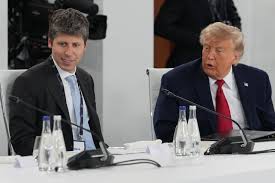
OpenAI CEO Sam Altman discussed the model release with U.S. Commerce Secretary Howard Lutnick on Wednesday, as part of a series of talks between Trump officials and AI sector executives in recent weeks.
Although Amodei has had a more tense relationship with the Trump administration, Anthropic has also participated in those discussions.
Trump himself ordered federal agencies to cease using Claude after the Pentagon classified Anthropic as a national security risk due to ethical and safety concerns regarding the use of AI in conflict. In response, Anthropic filed a lawsuit, which is currently pending in federal courts.
Anthropic stated on Friday that it was “pleased” by Mythos’ partial release late on Friday and that it will “continue to work with the government to expand access” to restore Fable’s availability to the wider public.
In a letter dated Friday, Lutnick informed Anthropic that its efforts to resolve the government’s concerns “yielded significant progress.”
Following SpaceX’s record-breaking June 12 initial public offering, OpenAI’s and Anthropic’s exploratory efforts to go public on Wall Street are further complicated by the government’s increased oversight of AI.
The idea that “pieces could be given to the American public, where the American public essentially becomes a partner with the companies” has been proposed by Trump as a way for the U.S. government to acquire a share in top AI firms.