
Barclays stated on Wednesday that autonomous food delivery robots and drones could reduce costs by several dollars to as low as $1 per order, a change that could unlock billions of dollars in profits for the global food delivery business.
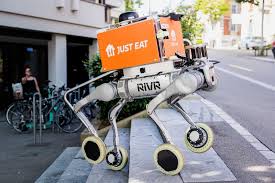
To improve their capabilities, international platforms like DoorDash are collaborating with autonomous delivery providers, mainly through sidewalk delivery robots (SDRs) and drones, which Barclays said represents a “clear strategic shift.”
According to the British brokerage, autonomous delivery now costs between $5 and $7 per order drop in early adopter markets with high manpower expenses.
This is $3 to $4 less than traditional rider delivery.
When compared to current rider deliveries in areas with greater labor expenses, autonomous delivery costs could eventually drop below $1 each drop, indicating potential savings of $8 to $9.
Barclays predicts that autonomous delivery could open up a $16 billion annual worldwide profitability pool for food delivery services, assuming cost reductions of roughly $4 per drop at long-term penetration levels.
Barclays stated that autonomous delivery penetration is still in its infancy, accounting for less than 1% of all food delivery orders worldwide.
Nonetheless, the brokerage projects that it will increase to around 2% by the end of the decade and reach roughly 10% by 2035.
Given early commercial deployments, platform-level investment, and exposure to higher labor costs that might be offset by automation, Barclays anticipates
DoorDash and Chinese food delivery giant Meituan will be near-term benefactors.
Additionally, it believes that Uber is in a strong position and that Prosus, a Dutch technology investor, will benefit in the long run.
According to Barclays, Delivery Hero, its Middle East division Talabat, and Grab in Southeast Asia are positioned as medium- to longer-term beneficiaries, with automation developments being minor and pilot-led.