
South Korean automaker Hyundai is unable to repurchase its former production plant in Russia because of the ongoing conflict in Ukraine. A buyback option is expected to expire next month.
Hyundai used to be Russia’s largest foreign automaker, together with its partner Kia.
However, in 2024, it sold its St. Petersburg facility.
Operations at the facility had been suspended since March 2022, a month after Moscow invaded its smaller neighbor, which provoked a backlash of Western sanctions that disrupted supply chains and payments.
Hyundai sold all of the plant to Russia’s AGR Automotive Group for a symbolic 140,000 won ($97) as part of the agreement, which also included a two-year buyback option.
January is when that clause expires.
In a statement, Hyundai informed that the buyback option has not yet been decided. A request for comment was not answered by AGR Automotive Group.
The clock is ticking on the buyback options of foreign automakers.
Even while U.S. President Donald Trump has made ending the war a high priority for his administration and is pressuring Moscow and Kyiv to reach a peace agreement, the war is still going on, and the EU and U.S. sanctions against Russia are still in effect.
“The war should be over,” the individual declared.
It was unclear whether Hyundai could negotiate an extension of the option or whether missing the January deadline would result in a formal renunciation of its right to a buyback.
Most foreign automakers left the Russian market because their reputations were at risk, and Western sanctions made it impossible for them to maintain factories.
Hyundai claimed it would lose 287 billion won when it sold its Russian holdings in 2024.
In the hopes of eventually returning, others, like Hyundai, sold their plants to Russian players for symbolic sums with options to repurchase them within predetermined timelines.
While Hyundai’s factory produces cars under the Solaris brand, which was once the name of a famous model made by the Korean carmaker for the Russian market, the majority of those plants are currently assembling Chinese automobiles under Russian brands.
When it chose not to exercise its option to repurchase 50% of its Russian factory from erstwhile partner Sollers, Japan’s Mazda Motor was the first to lose its buyback rights in October.
Mercedes-Benz, Nissan, Ford, and Renault all have buyback options that expire between 2027 and 2029. VW sold its assets with no buyback rights, and Toyota.
Once, the leading foreign automakers in Russia were Hyundai and Kia.
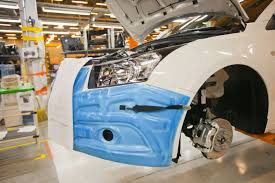
Before the company departed from Russia, Hyundai’s St. Petersburg plant was one of the biggest foreign-owned automobile manufacturers in the nation, capable of producing over 200,000 Hyundai and Kia cars a year.
Chinese companies currently control the majority of the market; in 2024, they sold almost a million cars in Russia out of a total of 1.57 million.
Prior to the conflict in Ukraine, the two largest foreign companies in the Russian market were Hyundai and Kia, in which Hyundai holds about a 35% share.
Together, they sold over 400,000 vehicles in 2019, accounting for roughly 23% of all new car sales and surpassing Avtovaz, the largest automaker in Russia. Its Russian facility generated around half of that tonnage domestically.
Once considered one of Europe’s most promising sectors, Russia’s automotive industry has only partially recovered this year.
Chinese companies currently control the majority of the market; in 2024, they sold almost a million cars in Russia out of a total of 1.57 million.